
Debt Decisions Have Consequences: Slow Down Before You Act
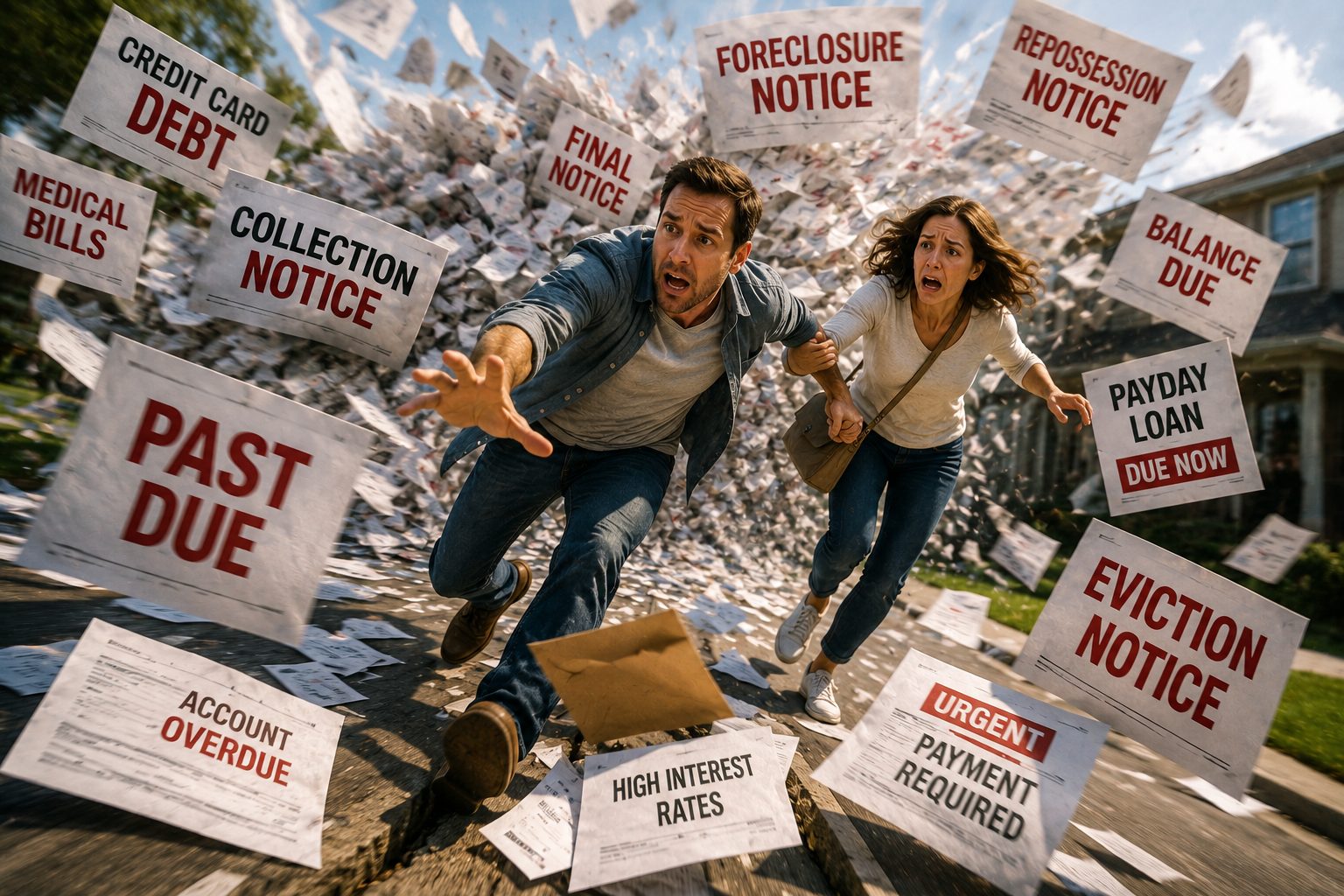 When money is tight, fear can take over. You feel as if a debt storm has caught you.
People may feel pressured to make fast decisions: use credit cards for basic needs, borrow from retirement, ignore collection letters, hire a debt settlement company, transfer property to family, or sign documents they do not understand.
Those choices may seem necessary at the time. But the wrong decision can create serious financial, emotional, social, and family consequences.
Debt Stress Is Real
Debt is not just about money. It can affect sleep, health, work, relationships, and peace of mind.
Financial stress can cause the following:
- Anxiety or panic.
- Shame or embarrassment.
- Anger or depression.
- Arguments with family.
- There is a fear of answering the phone.
- Fear of opening mail.
- Feeling trapped or alone.
When people feel overwhelmed, they may act quickly just to stop the fear. But panic can lead to decisions that make the problem worse.
Slow Down Before You Act
 Be careful before
- Draining retirement savings.
- Borrowing from family or friends.
- Taking payday or high-interest loans, or title or registration loans on your vehicles, is not a wise idea.
- Using one credit card to pay another.
- Ignoring lawsuits or court papers.
- Transferring property to someone else.
- Hiring a debt settlement or debt management company.
- Signing payment plans, settlement agreements, or loan papers without understanding them can lead to serious consequences.
Before making a major debt decision, ask:
- Am I acting because I understand my options or because I am scared?
- Will this action solve the problem, or only delay it?
- Could this lead to lawsuits, garnishment, foreclosure, repossession, or tax problems?
- Will this decision affect my family?
- Do I understand what I am signing?
If the answer is “I do not know,” pause and get advice.
Be Careful With Debt Settlement Companies
Some companies advertise “debt relief,” “debt settlement,” “debt negotiation,” “debt management,” or “financial freedom.” Some may tell consumers to stop paying creditors and instead send money to the company or to a special account.
That can be risky.
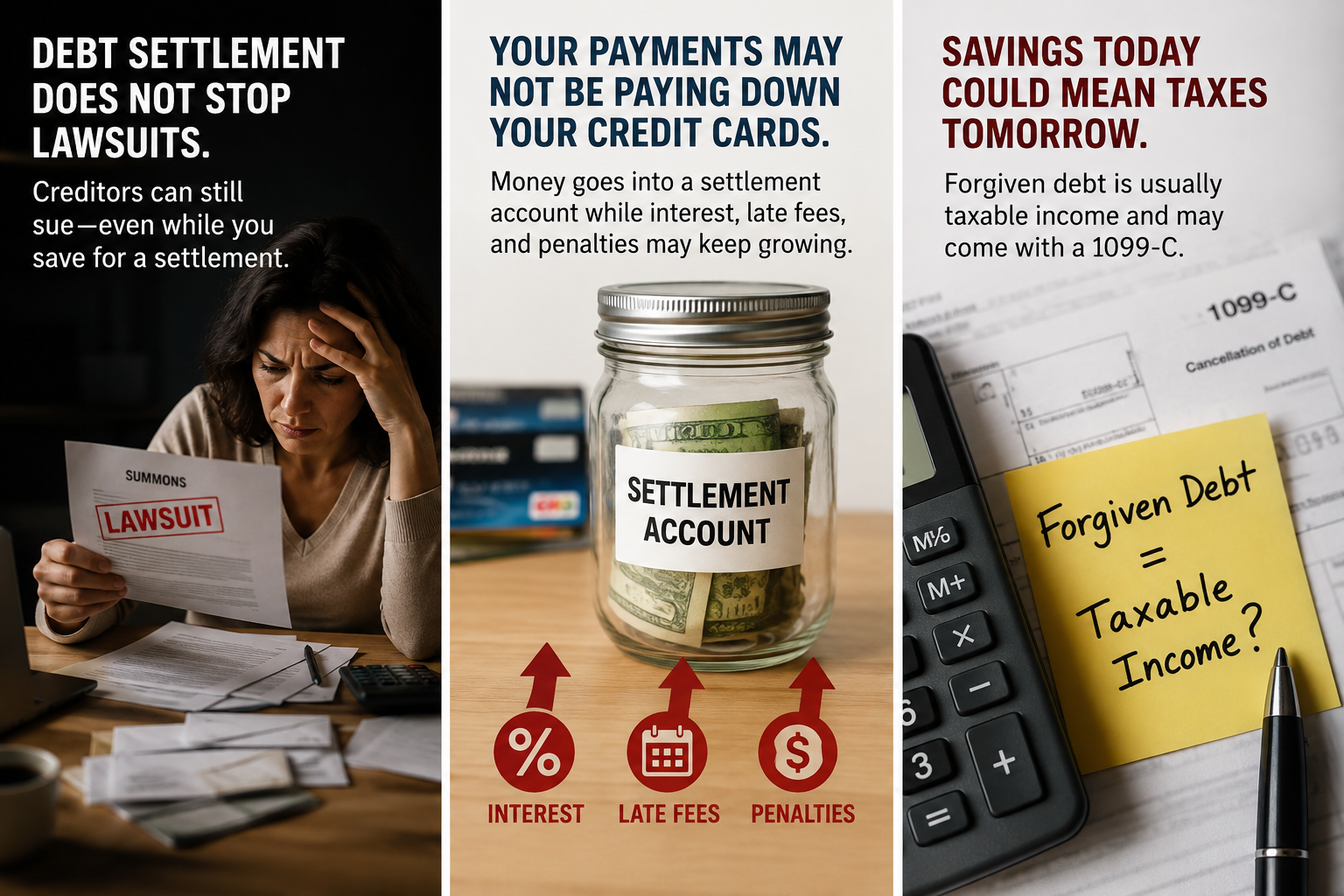
While waiting for a settlement, late fees and interest may grow, credit scores may drop, creditors may sue, and wages or bank accounts may be garnished after a judgment. Some creditors may refuse to settle. The stress may get worse because the consumer believes help is coming while the debt problem continues to grow.
Federal enforcement actions show why caution is necessary. In CFPB v. Freedom Debt Relief, LLC, the CFPB alleged that Freedom Debt Relief charged advance fees, failed to tell consumers about their rights to deposited funds, and misled consumers about its services. The case resulted in a stipulated final judgment and order. In CFPB v. DMB Financial, LLC, the CFPB alleged that DMB Financial charged unlawful debt-settlement fees and misled consumers. That case also resulted in a stipulated final judgment. The FTC also keeps a public list of companies and people banned by federal court orders from some or all debt-relief businesses.
These cases do not mean every debt-management company is bad. But they show why consumers should be cautious before signing a contract or sending money.
Bankruptcy May Be One Option
Bankruptcy is not a moral failure. It is a legal tool created to help people and businesses manage debt they cannot pay.
Chapter 7 may help some consumers discharge certain debts. Chapter 13 may help people with regular income catch up on mortgage payments, car payments, taxes, or other debts through a repayment plan.
Bankruptcy is not right for everyone. But sometimes, waiting too long, draining savings, transferring property, or making emotional decisions can reduce available options.
Final Thought
As a retired law professor, my goal is to help you understand your options. Debt can feel frightening, embarrassing, and lonely. But panic is not a plan.
Before making a major debt decision, gather your papers, open your mail, list your debts and expenses, and get reliable advice.
You can often solve or manage debt problems. But fear, shame, and silence can make them worse.
Slow down. Get informed. Protect your peace of mind and your future before choosing a path.


Diane is a well respected Arizona bankruptcy and foreclosure attorney. As a retired law professor, she believes in offering everyone, not just her clients, advice about bankruptcy and Arizona foreclosure laws. Diane is also a mentor to hundreds of Arizona attorneys.
*Important Note from Diane: Everything on this web site is offered for educational purposes only and not intended to provide legal advice, nor create an attorney client relationship between you, me, or the author of any article. Information in this web site should not be used as a substitute for competent legal advice from an attorney familiar with your personal circumstances and licensed to practice law in your state. Make sure to check out their reviews.*




In Case You Missed It
Published On: September 13, 2026
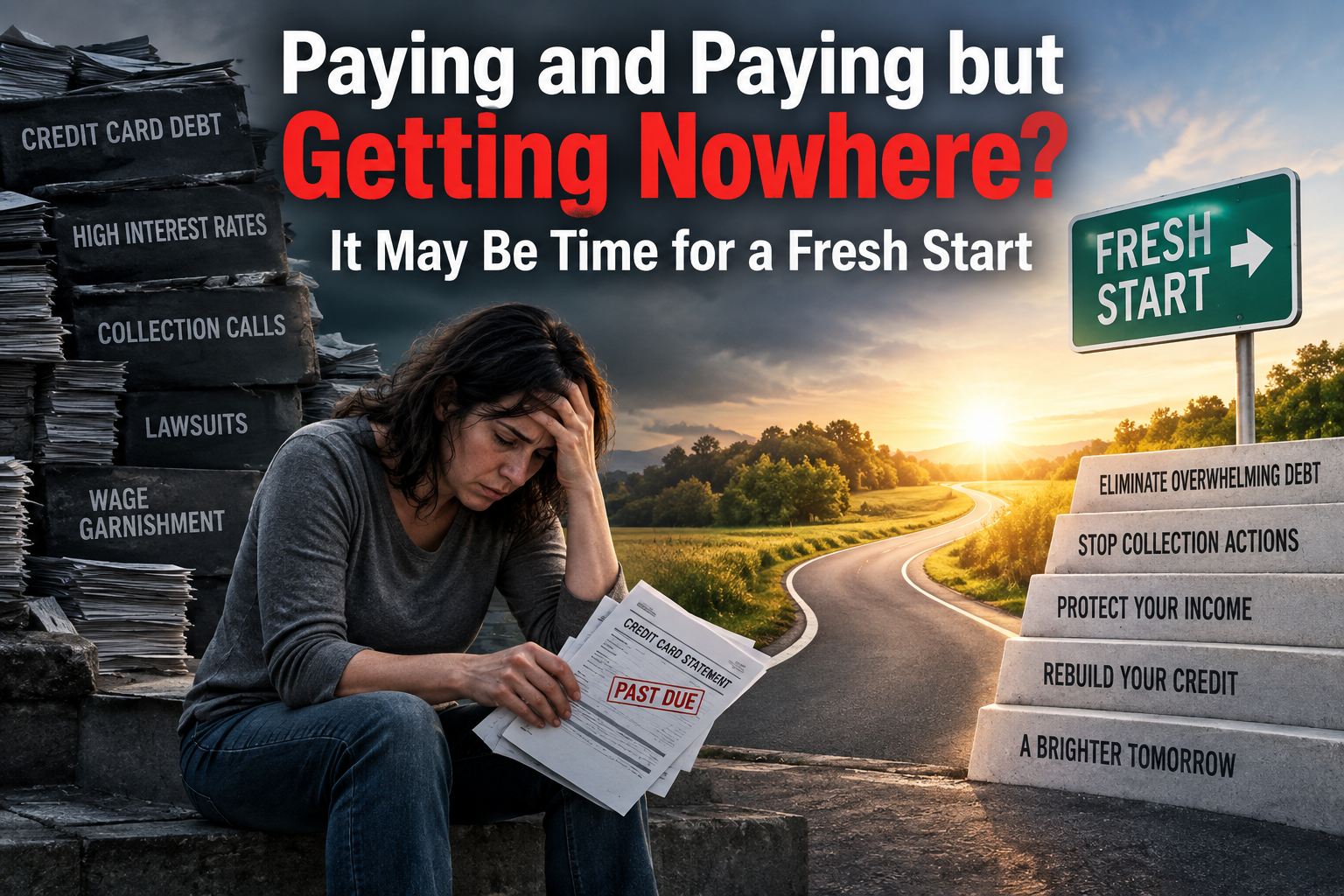
Paying debt every month but getting nowhere can cost you years of income and thousands of dollars in interest. Before signing up with a debt management or debt settlement company, understand what debts are covered, what fees you may pay, whether creditors can still sue or garnish wages, and whether forgiven debt could create tax problems. For some people, bankruptcy may provide a faster, more complete fresh start and a chance to rebuild.
Published On: September 13, 2026
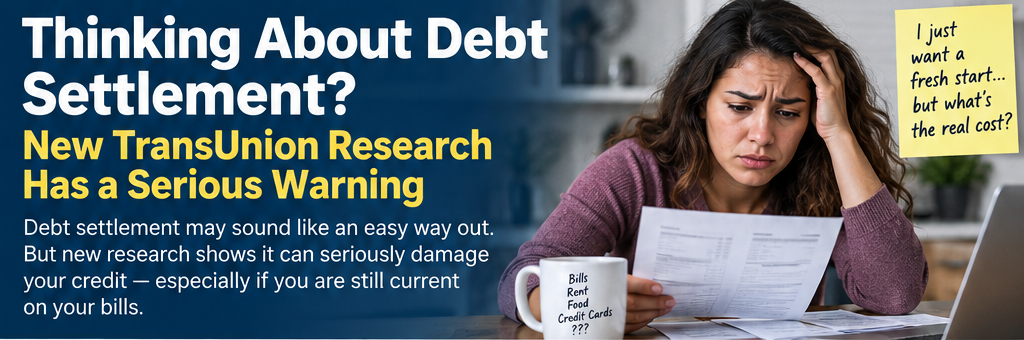
Thinking About Debt Settlement? Read This Before You Stop Paying Debt settlement may sound like an easier and safer choice than bankruptcy. You have probably seen the ads: “Pay only a fraction of what you [...]
Published On: August 9, 2026
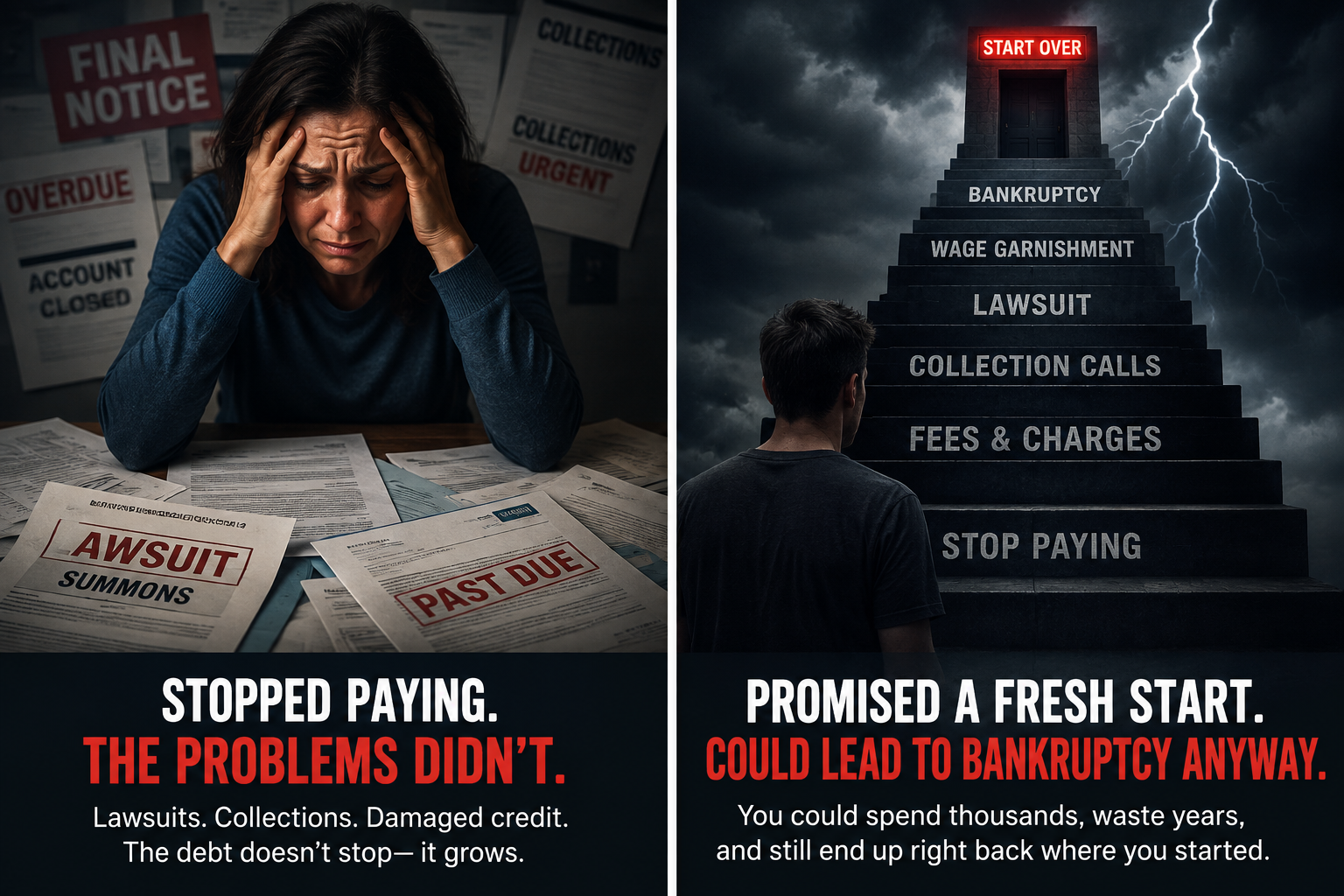
Debt-settlement companies promise to reduce what you owe, but creditors do not have to settle. Learn what federal regulators say about growing balances, lawsuits, fees, taxes and other debt-settlement risks before you stop paying your creditors.
Published On: August 8, 2026
Debt settlement companies promise relief from overwhelming debt, but creditors do not have to settle and lawsuits can continue. Learn about the hidden fees, growing balances, tax consequences, and alternatives before signing a contract.