
Debt Settlement Can Make a Bad Financial Situation Worse: What the Government Found
Hi, I’m Diane Drain. I am a retired law professor and a full-time Arizona bankruptcy attorney. For more than 30 years, I have worked to protect Arizona consumers from companies and greedy, unprofessional lawyers who take advantage of people when they are financially vulnerable.
That experience has taught me something very important: When people are frightened about debt, they are especially vulnerable to promises that sound too good to be true.
That is why I want you to understand how debt-settlement companies work, what can go wrong, and what questions you should ask before trusting anyone with your money or your financial future.
The Consumer Financial Protection Bureau warns that dealing with debt-settlement companies can be risky. Some creditors may refuse to work with the company, and in many cases the company may not be able to settle all of a consumer’s debts.
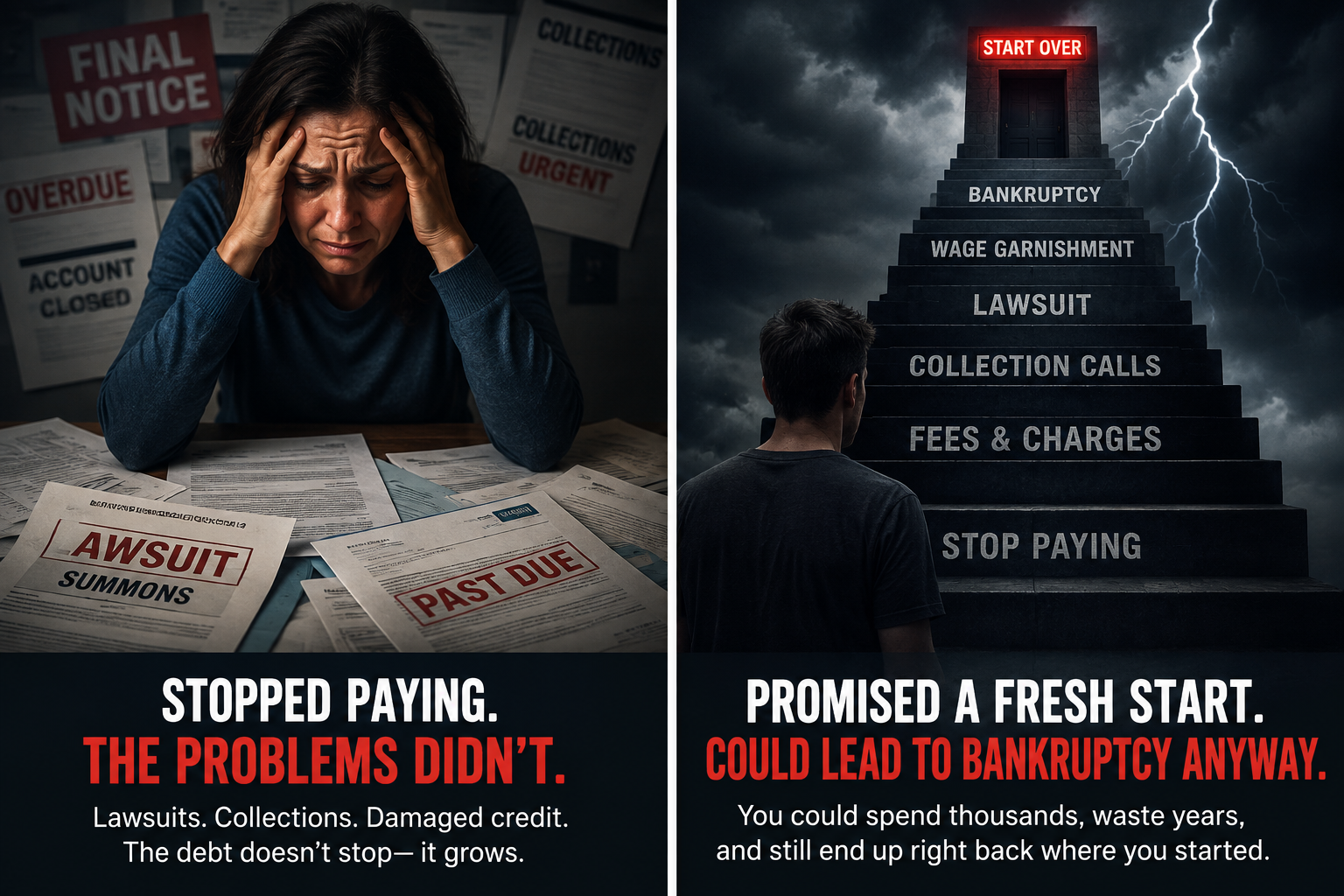 Debt settlement advertisements can sound very attractive:
“Pay only a fraction of what you owe.”
“Become debt-free without bankruptcy.”
“We negotiate with your creditors so you don’t have to.”
But before you stop paying your creditors and put your financial future in the hands of a debt-settlement company, there is a much more important question:
What happens if the debt settlement plan doesn’t work?
That question matters because a debt-settlement company cannot force your creditors to settle.
The Consumer Financial Protection Bureau (CFPB) warns that some creditors may refuse to work with a debt-settlement company and that, in many cases, the company may be unable to settle all of a consumer’s debts.
Meanwhile, your financial problems may be getting worse.
A Government Investigation Found Serious Problems with Debt-Settlement companies
In 2010, the U.S. Government Accountability Office (GAO) conducted an undercover investigation of the debt-settlement industry. GAO investigators posed as consumers struggling with debt and contacted 20 debt-settlement companies. GAO also reviewed government enforcement cases involving debt-settlement businesses.
What they found was disturbing. “Debt Settlement: Fraudulent, Abusive and Deceptive Practices Pose Risk to Consumers” GAO concluded that some companies engaged in fraudulent, deceptive, or abusive practices that could leave consumers in worse financial condition.
GAO said that its investigation uncovered issues that were serious enough to raise significant consumer-protection concerns.
1. Nearly All Told Consumers to Stop Paying Their Creditors
One of GAO’s most troubling findings was that nearly all of the companies it contacted advised the undercover consumers to stop paying their creditors—even accounts that were still current.
That same danger exists today. The CFPB warns that debt-settlement companies typically encourage consumers to stop making credit-card payments so they can accumulate money for future settlements.
But stopping payment does not stop the debt.
While you wait for enough money to accumulate:
- interest may continue to grow;
- late fees and other charges may be added;
- your credit may suffer;
- collection efforts may increase; and
- a creditor may sue you.
The CFPB warning is simple and important: Debt settlement may leave you deeper in debt than when you started.
2. Your Creditors Do Not Have to Wait
Signing up with a debt-settlement company does not require your creditors to stop collecting. Your creditors do not have to wait while you save money for a settlement. And they do not have to accept the settlement the company eventually offers.
A creditor may:
- continue collection efforts;
- turn the account over to a debt collector;
- refuse to negotiate;
- demand more money than you have saved; or
- file a lawsuit.
The CFPB specifically warns that participating in a debt-settlement program may result in a creditor filing a collection lawsuit while you are still trying to accumulate enough money to make a settlement offer. That creates a serious problem: The settlement company may be waiting for you to save money while your creditor is moving forward with collection.
3. Settling One Debt Does Not Mean the Program Worked
Suppose you place five credit cards into a debt-settlement program. Months later, the company successfully settles one account. That’s good news. But what about the other four?
One creditor might settle. Another might demand much more money than expected. Another might refuse to negotiate. And another might sue you.
The CFPB warns that debt-settlement companies may be unable to settle all of your debts. That is why consumers should be careful when hearing statistics about a company’s “successful settlements.”
The important question is not simply, “Have you successfully settled debts?”
Instead ask, “What percentage of your customers successfully complete the entire program and resolve all or substantially all of their enrolled debts?”
Those are very different questions.
4. The GAO Found the Shocking Truth About the Debt-Settlement’s Claims About Success – as low as 9% of all the debts were settled.
During the 2010 undercover investigation, representatives of some companies claimed success rates as high as 85%, 93%, and even 100%. GAO found those claims very questionable and compared them with federal and state investigations that had reported dramatically lower completion rates in some debt-settlement programs, some as low as 9% of the debts were settled. In one enforcement matter examined by GAO, only 8% of approximately 15,000 clients completed the program, according to evidence cited by the Department of Justice. Some customers ended up in bankruptcy.
That is important because there is a difference between successfully settling one debt and successfully getting a consumer out of debt. A company might negotiate a reduction on one account while the consumer remains unable to resolve several others.
The consumer’s financial problem is not solved simply because one creditor agreed to a settlement.
5. Some Consumers Actually Paid More Than They Originally Owed
Perhaps one of the most surprising lessons from the GAO investigation was that a reduced settlement balance did not always mean the consumer actually saved money. GAO described consumers who were counted as successful even though, after settlement payments and company fees were considered, they ultimately paid more than the amount they originally owed. Only 0.3% achieved the savings the company had promised.
GAO also described a couple who received a congratulatory letter telling them how much money they supposedly saved. But after the company’s fees were included, the couple had actually paid more than 140% of the amount originally owed on the four settled accounts.
That leads to an important question whenever someone promises to “reduce” your debt:
Reduce it compared with what?
You need to consider the entire cost: Settlement payment + fees + accumulated interest + penalties + other charges.
A creditor might agree to accept less than the balance showing on the account at the time of settlement. That does not necessarily mean the consumer saved money overall.
6. What About the Money You Put Into a Settlement Account?
This is an area where today’s federal law is different from the practices GAO examined in 2010.
Under the Federal Trade Commission’s current Telemarketing Sales Rule guidance, a covered debt-relief company may require money to be placed into a dedicated account, but important protections apply. The Rule is an important consumer protection, assuming the company follows the law (many of them do not).
For covered services, among other requirements:
- the account must be at an insured financial institution;
- the consumer owns and controls the money;
- the consumer must be able to withdraw the funds;
- the debt-relief company cannot own or control the company administering the account;
- the consumer can stop using the debt-relief service without a penalty; and
- money remaining in the account, other than properly earned fees, must be returned when the relationship ends.
These federal protections apply to services covered by the Telemarketing Sales Rule; the exact application of the Rule depends on how the service is marketed and provided.
So ask:
- Whose money is in this account?
- Who controls it?
- Can I get it back if I leave the program?
Federal Law Also Restricts Advance Fees
The FTC strengthened its Telemarketing Sales Rule in 2010.
For debt-relief services covered by that Rule, a company generally cannot collect a debt-relief fee until:
- it has successfully renegotiated, settled, reduced or otherwise changed the terms of at least one debt;
- the consumer has agreed to the creditor’s settlement or other resolution; and
- the consumer has made at least one payment to the creditor or debt collector under that agreement.
The Rule also prohibits companies from improperly front-loading fees for multiple debts.
The Rule requires covered companies to disclose important information, including anticipated costs, the approximate time necessary to obtain results, how much the consumer must save before settlement offers are made, and the consequences of stopping payments.
Those protections are important.
But they do not change the fundamental fact:
No debt-settlement company can force your creditor to settle.
7. Forgiven Debt Can Also Create a Tax Problem
There is another issue consumers sometimes overlook. If a creditor cancels part of a debt, the forgiven amount may be taxable income for federal income-tax purposes. The IRS explains that canceled debt generally must be reported as income unless an exception or exclusion applies.
There are important exceptions and exclusions. For example, debt canceled in a bankruptcy case is normally not taxed. An exclusion also may be available to the extent the taxpayer was insolvent immediately before the debt was canceled. Other specialized exclusions may also apply.
So a creditor agreeing to forgive $20,000 does not automatically mean the consumer simply saved $20,000. There may be tax consequences that need to be examined.
8. You May Spend Years Trying to Avoid Bankruptcy—Then File Bankruptcy Anyway
This may be the most painful outcome. Someone is frightened of bankruptcy, so they enter a debt-settlement program instead. They stop paying their creditors. Months, perhaps years, pass.
During that time they may:
- watch their balances increase;
- suffer damage to their credit;
- receive collection calls and letters;
- face lawsuits;
- spend money on settlement-related costs; and
- use savings they might otherwise have needed for emergencies.
Then the program fails. Eventually, the consumer speaks with a bankruptcy attorney and discovers that bankruptcy may have been an available option all along. The GAO investigation documented enforcement cases involving consumers who ultimately ended up in bankruptcy after unsuccessful debt-relief efforts.
That does not mean bankruptcy is always better than debt settlement. It means something much simpler:
Bankruptcy should be evaluated before you spend months or years trying to avoid it.
The Question Debt Settlement Ads Rarely Ask
Debt-settlement advertising naturally focuses on what happens if everything works. Consumers should spend just as much time asking what happens if it doesn’t.
Before enrolling, ask:
- What happens if one of my creditors refuses to settle?
- What happens if a creditor sues me?
- How much interest and other charges could accumulate while I wait?
- What fees will I pay?
- How long will the entire program take?
- What percentage of customers actually finish the entire program?
- What happens if I cannot continue making deposits into the settlement account?
- What happens if I need that money for an emergency?
- Could I negotiate directly with my creditors instead?
- Would nonprofit credit counseling be appropriate?
- Should I at least learn what bankruptcy would mean in my situation?
The CFPB recommends considering other options, including negotiating directly with creditors and consulting a nonprofit credit counselor, before choosing debt settlement.
Imagine the Worst-Case Scenario Before You Sign
Before signing a debt-settlement agreement, imagine this:
- You stop paying your creditors.
- A year passes.
- Your balances are larger because of interest and other charges.
- One creditor refuses to settle.
- Another creditor sues you.
- You do not have enough money saved to settle all the accounts.
Now ask yourself:
“What would I do next?”
If your answer is:
“I would probably have to file bankruptcy” and then learn what bankruptcy would actually mean before spending months or years trying to avoid it and spending hundreds, if not thousands of dollars unnecessarily. That doesn’t mean you should file bankruptcy. It means you should understand all your options before making a decision that could make your financial situation worse.
Don’t Compare a Promise With a Fear – Educate Yourself
Perhaps the biggest mistake consumers make is comparing the best possible outcome promised by a debt-settlement advertisement with the worst thing they imagine bankruptcy will be.
That is not a fair comparison. Instead, compare the realistic costs, risks, protections, and likely results of all your choices.
Depending on your circumstances, those choices might include:
- paying the debts yourself;
- negotiating directly with creditors;
- temporarily taking no action where appropriate; or
- filing for bankruptcy protection.
The right question is NOT “How do I avoid bankruptcy at all costs?”
The better question IS, “Which option is most likely to leave me financially healthier when this is over?”
The answer will be different for every person.
Before you deliberately stop paying your creditors, understand what happens if the promised settlement never comes.
Understand All of Your Options Before You Decide
 The right solution starts with understanding all of your options. If you would like to learn more, please call me at 602-246-7106 or visit www.DianeDrain.com.
This is purely educational, with no commitment to filing a bankruptcy.
As a retired law professor and full-time bankruptcy attorney, I believe everyone facing financial problems deserves the opportunity to understand their options before making any important decision about how to solve their debt situation.
That is why I offer a personal, free consultation focused on education—not pressure so you can better understand your choices and decide what path is right for you.
Please note: my consultation is limited to people who live in Arizona.
Sometimes bankruptcy is the best solution. Sometimes it is not. My goal is to help you understand the difference and find the best way forward toward greater financial stability and a more peaceful life.
Thank you very much for taking the time to read this information. If you watched the accompanying video, thank you for taking the time to listen. I look forward to talking with you.


Diane is a well respected Arizona bankruptcy and foreclosure attorney. As a retired law professor, she believes in offering everyone, not just her clients, advice about bankruptcy and Arizona foreclosure laws. Diane is also a mentor to hundreds of Arizona attorneys.
*Important Note from Diane: Everything on this web site is offered for educational purposes only and not intended to provide legal advice, nor create an attorney client relationship between you, me, or the author of any article. Information in this web site should not be used as a substitute for competent legal advice from an attorney familiar with your personal circumstances and licensed to practice law in your state. Make sure to check out their reviews.*




In Case You Missed It

Published On: September 27, 2026
Doing the wrong thing is often easier than doing the right thing. But perhaps that is exactly why honesty, kindness, courage, and responsibility have value. Character is often revealed when the easier choice is available, but we choose the better one.
Published On: September 13, 2026
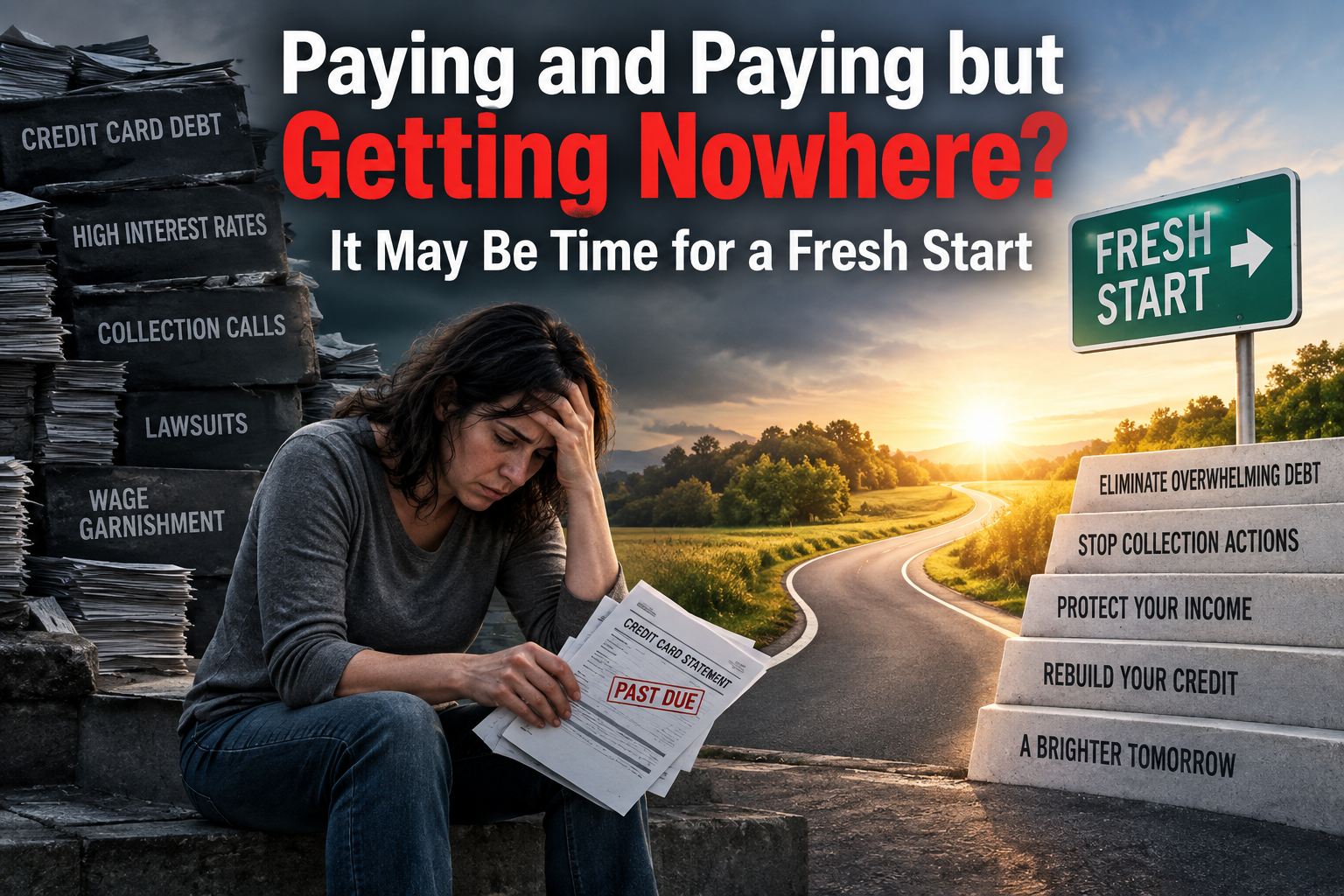
Paying debt every month but getting nowhere can cost you years of income and thousands of dollars in interest. Before signing up with a debt management or debt settlement company, understand what debts are covered, what fees you may pay, whether creditors can still sue or garnish wages, and whether forgiven debt could create tax problems. For some people, bankruptcy may provide a faster, more complete fresh start and a chance to rebuild.
Published On: September 13, 2026
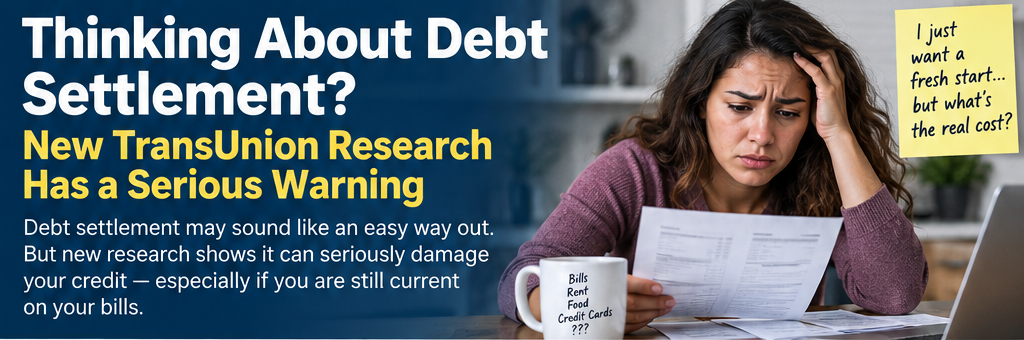
Thinking About Debt Settlement? Read This Before You Stop Paying Debt settlement may sound like an easier and safer choice than bankruptcy. You have probably seen the ads: “Pay only a fraction of what you [...]
Published On: August 8, 2026
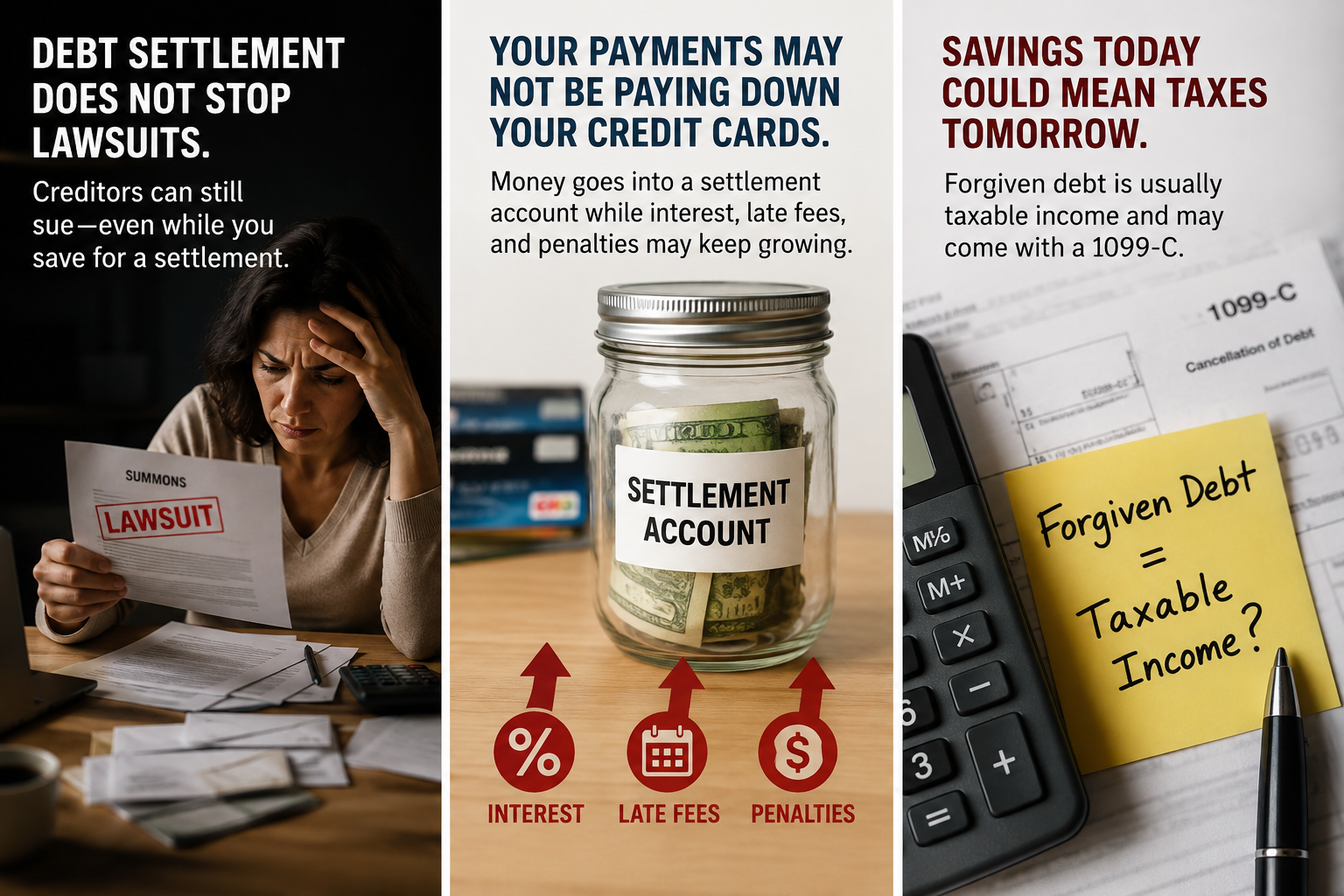
Debt settlement companies promise relief from overwhelming debt, but creditors do not have to settle and lawsuits can continue. Learn about the hidden fees, growing balances, tax consequences, and alternatives before signing a contract.