
DEBT DOESN’T HAVE TO CONTROL YOUR FUTURE. A Fresh Start May Be Possible
 If you are making payments every month but your debt barely seems to move, you are not imagining things. High interest rates can keep people trapped in debt for years.
A recent Business Insider article looked at $10,000 in credit card debt. Using a 21.47% interest rate, it calculated that paying $200 a month could take 127 months — more than 10½ years — to pay off the debt. During that time, the person would pay about $15,374 in interest, making the total cost about $25,374. And that assumes no new charges are added.
Business Insider identifies the article as sponsored by Achieve, a debt-relief company.
The basic problem is confirmed by government data. The Federal Reserve reports that the average credit card interest rate was 20.94% in the second quarter of 2026. For accounts actually being charged interest, the average was 22.15%. Read the Federal Reserve Consumer Credit report
Credit Card Interest Can Keep You Trapped for Decades:
You owe $10,000.
You make a payment.
Interest is added.
Your balance goes down much less than you expected.
Next month, interest is added again.
This can continue for years.
That is why saying “I will keep making minimum payments until everything is paid” may not be a realistic financial plan.
Sometimes the Math Simply Does Not Work
According to the Federal Reserve Bank of New York, American households owed about $1.263 trillion in credit card debt at the end of the second quarter of 2026. Total household debt was about $18.771 trillion. Read the Federal Reserve Bank of New York report
Financial problems can result from job loss, divorce, illness, rising housing costs, retirement, family emergencies, or simply years of high-interest debt. Sometimes people assume that anyone with financial problems spent too much money. That is not always true.
Sometimes the math simply does not work.
You cannot pay $5,000 of monthly expenses when you have only $4,000 of income. And you cannot solve a serious debt problem just by being told to “budget better.”
Paying More Helps—If You Have More Money
In the Business Insider example, increasing the payment on $10,000 of debt from $200 to $350 shortened the payoff period from 127 months to 41 months. Read the Business Insider article. But what if you do not have an extra $150 every month? If paying more toward credit cards means you cannot afford housing, food, medicine, utilities, insurance, or transportation, then “pay more” is not a solution.
The better question may be, “Can I realistically pay this debt at all?”
Debt Management Plans Do Not Cover Everything
A legitimate nonprofit credit counseling organization may recommend a debt management plan. You make one monthly payment to the counseling organization, which distributes money to participating creditors. Some creditors may agree to reduce interest rates or waive fees. That can help some people. But debt management plans generally cover only certain debts.
The Federal Trade Commission explains that these plans generally deal with most unsecured debts and are not designed for debts secured by property, such as mortgages or vehicle loans. And they rarely cover all the unsecured debts, which leaves you to deal with those outside of your arrangements with the debt management company. The FTC also recommends confirming that your creditors actually agree with the proposed plan. Read the FTC’s guidance on getting out of debt.
You may still have to separately pay:
- Your mortgage
- Your vehicle loan
- Taxes
- Debts not included in the plan, like other credit cards or personal loans that do not participate
Creditors Outside the Plan May Still Collect
A debt management plan is not a court order. It does not create the protection provided by the federal bankruptcy automatic stay. Creditors outside the plan may still have their normal collection rights. Depending on the debt and applicable law, that may include:
- Collection calls
- Lawsuits
- Judgments
- Wage garnishment
- Bank garnishment
This can destroy the budget used to create the debt management plan.
Suppose you can afford $700 a month for a debt management program. Then an outside creditor sues you and begins garnishing part of your wages. Your take-home pay drops, but the $700 payment remains due. Suddenly, the plan may no longer be affordable.
Debt Management Can Take Four Years or Longer
The Federal Trade Commission says a successful debt management plan may require regular payments for 48 months or more. Read the FTC’s debt-management guidance. That is four years or longer. During that time, you could face a job loss, medical expense, car repair, rent increase, family emergency, lawsuit, or garnishment.
Before starting a long repayment program, ask:
“Can I really make this payment every month for four or five years?”
And:
“What happens to the debts that are not included?”
Be Careful With Debt Settlement
Debt settlement is different from debt management. A settlement company may encourage you to stop paying creditors while you save money for possible settlements.
During that time:
- Interest grows.
- Late fees may continue.
- Your credit suffers.
- Creditors keep collecting.
- Creditors sue.
- Some creditors may refuse to settle.
- Fees may be charged.
- Not every debt may be resolved.
The Consumer Financial Protection Bureau and the Federal Trade Commission both warn consumers to understand these risks. Read CFPB information about debt-relief programs
Debt Settlement Can Also Create a Tax Problem
Suppose you owe $30,000 and a creditor agrees to accept $15,000. The other $15,000 is canceled. The Internal Revenue Service generally treats canceled debt as taxable income unless an exception or exclusion applies. Read IRS Publication 4681. There are important exclusions, including insolvency in some situations.
But debt settlement can create another problem: Will I owe taxes on the debt that was forgiven?
Bankruptcy Is Different: It Is Designed to Provide a Fresh Start
Bankruptcy is often described as something terrible that should be avoided at almost any cost. That misses the purpose of the law. The United States Courts explains that a primary purpose of bankruptcy is to discharge certain debts and provide an honest debtor with a fresh start. Read U.S. Courts’ Chapter 7 Bankruptcy Basics
For someone who qualifies, Chapter 7 may discharge many common unsecured debts, including qualifying:
- Credit card debts
- Medical bills
- Personal loans
- Old utility bills
- Collection accounts
- Certain judgments
Not every debt can be discharged, and income, assets, liens, taxes, prior cases, and recent transactions can affect the result. Which is why it is very important to talk to an experienced bankruptcy attorney who analyzes your unique situation and helps you understand your options.
But bankruptcy can provide something very different from years of struggling with debt: A legal path toward a fresh financial start.
Bankruptcy Can Stop the Collection Treadmill
When a Chapter 7 case is filed, federal law generally creates an automatic stay. The United States Courts explains that creditors generally may not continue:
- Collection lawsuits
- Wage garnishments
- Collection calls
- Other collection actions
There are exceptions, and some creditors may ask the bankruptcy court for permission to proceed.
But the important difference is this: Bankruptcy protection does not depend on every creditor voluntarily agreeing. This is the major difference between bankruptcy and debt management or debt settlement.
The protection comes from federal law. For someone facing lawsuits, judgments, or garnishments, that can be extremely important.
Bankruptcy Can Provide a Legal Ending Point
A bankruptcy discharge releases the debtor from personal liability for qualifying discharged debts. It also prohibits creditors from continuing to collect those discharged debts. Read U.S. Courts’ explanation of bankruptcy discharge.
For someone who qualifies, bankruptcy can provide: A defined point when qualifying old debts are legally behind you.
Bankruptcy May Allow You to Begin Rebuilding Sooner
Many people fear bankruptcy because they think: “My credit will be ruined forever.”
Bankruptcy does affect a credit report. The Consumer Financial Protection Bureau explains that a Chapter 7 bankruptcy may remain on a credit report for up to 10 years, while Chapter 13 generally remains for seven years. But that does not mean you cannot begin rebuilding sooner. Many people find that they qualify for a new vehicle loan a few months after filing and can buy a home 18 to 24 months after bankruptcy is filed.
To rebuild credit after bankruptcy, the CFPB recommends:
- Paying current bills on time
- Keeping balances low
- Avoiding too much new credit
- Reviewing credit reports
- Correcting errors
It also explains that recent negative information generally has more effect on a credit score than older negative information. Read the CFPB’s guidance on rebuilding credit.
Someone already dealing with missed payments, maxed-out cards, collections, lawsuits, and garnishments is not necessarily choosing between: bankruptcy and perfect credit.
The real choice is: Years of unresolved financial problems versus resolving qualifying debt and beginning to rebuild now.
No one can promise how quickly a particular credit score will improve. But bankruptcy may allow someone with unmanageable debt to resolve qualifying debts and begin rebuilding sooner than spending four or more years in a debt management plan and then start rebuilding their credit if, and when, the debt management plan is completed (assuming all the debts were part of the program).
Bankruptcy Has an Important Tax Advantage
Ordinary debt settlement may create taxable canceled debt. Bankruptcy is different. The Internal Revenue Service states that debt canceled in a Title 11 bankruptcy case is not included in the debtor’s income. Read IRS Publication 4681
There can still be tax reporting requirements and other tax consequences.
But the basic rule is important: Qualifying debt discharged in bankruptcy generally does not create cancellation-of-debt income.
That can be a major advantage over settling debts outside bankruptcy.
Bankruptcy Is Not a Failure
Many people who eventually file bankruptcy have already spent years trying to avoid it.
They may have:
- Used savings or cashed in retirement accounts (funds that would have been protected from creditors)
- Borrowed from family, which may cause that family member to go into debt
- Used consolidation loans only to find themselves more in debt
- Cut expenses, including necessary medical expenses
- Made minimum payments for years and now owe more than they did years earlier
- Tried credit counseling or debt settlement only to find out they can be sued and their wages garnished
And they are still buried in debt. At some point, continuing to pour money into debts that cannot realistically be repaid may not be the healthiest financial choice, plus it causes families to break apart.
Bankruptcy exists because sometimes people need a legal way out. For someone who qualifies, it can provide a path toward a healthier financial future.
A Fresh Start Means More Than Eliminating Debt
Imagine if the money now going toward old credit card debt could instead help you:
- Build an emergency fund
- Pay medical expenses
- Repair your car
- Save for retirement
- Pay normal living expenses without new debt
- Begin rebuilding credit
- Live without constant collection pressure
That is what a fresh start is about. The goal is not simply to erase debt. It is to give a qualifying person the opportunity to build a healthier financial life.
Ask a Better Question
People struggling with debt often ask:
“How can I pay everything I owe?”
There may be a better question:
“Which choice gives me the healthiest financial life five years from now?”
 Maybe the answer is paying the debt yourself. Maybe a legitimate nonprofit debt management plan makes sense. Maybe negotiating directly with creditors is appropriate. But if you are buried under debt you cannot realistically repay, bankruptcy deserves to be part of the discussion.
Ask:
How much do I owe?
How long will repayment take?
How much interest will I pay?
Which debts will a debt management plan cover?
What happens to creditors outside the plan?
Could those creditors sue or garnish my wages?
Could settlement create taxable income?
Would bankruptcy stop collection activity?
Which debts could bankruptcy discharge?
When could I begin rebuilding?
And most importantly, ask yourself:
Where will I be financially five years from now?
For someone who can reasonably repay the debt, repayment may be right. But for someone overwhelmed by debt, lawsuits, or garnishments, bankruptcy should not automatically be viewed as something to fear. It can provide exactly what federal law was designed to provide:
A fresh start and a chance to rebuild.
Authoritative Resources
Federal Reserve Board — Consumer Credit (G.19)
https://www.federalreserve.gov/Releases/g19/current/
Federal Reserve Bank of New York — Household Debt and Credit
https://www.newyorkfed.org/newsevents/news/research/2026/20260811
Federal Trade Commission — How To Get Out of Debt
https://consumer.ftc.gov/articles/how-get-out-debt
Consumer Financial Protection Bureau — Debt Relief Programs
https://www.consumerfinance.gov/ask-cfpb/what-is-a-debt-relief-program-and-how-do-i-know-if-i-should-use-one-en-1457/
Consumer Financial Protection Bureau — Rebuilding Credit
https://www.consumerfinance.gov/consumer-tools/credit-reports-and-scores/how-to-rebuild-your-credit/
Internal Revenue Service — Publication 4681
https://www.irs.gov/publications/p4681
United States Courts — Chapter 7 Bankruptcy Basics
https://www.uscourts.gov/court-programs/bankruptcy/bankruptcy-basics/chapter-7-bankruptcy-basics
United States Courts—Discharge in Bankruptcy
https://www.uscourts.gov/court-programs/bankruptcy/bankruptcy-basics/discharge-bankruptcy-bankruptcy-basics
Business Insider — How Long It Takes to Pay Off $10,000 of Debt
https://www.businessinsider.com/personal-finance/how-long-to-pay-off-debt
Additional articles:
Debt Settlement Can Wreck Your Credit — Even If You’re Paying on Time
The Debt Settlement Trap: What Happens When the Promises Don’t Work?
Debt Settlement Companies: The Hidden Risks That Could Leave You Worse Off


Diane is a well respected Arizona bankruptcy and foreclosure attorney. As a retired law professor, she believes in offering everyone, not just her clients, advice about bankruptcy and Arizona foreclosure laws. Diane is also a mentor to hundreds of Arizona attorneys.
*Important Note from Diane: Everything on this web site is offered for educational purposes only and not intended to provide legal advice, nor create an attorney client relationship between you, me, or the author of any article. Information in this web site should not be used as a substitute for competent legal advice from an attorney familiar with your personal circumstances and licensed to practice law in your state. Make sure to check out their reviews.*




In Case You Missed It
Published On: September 13, 2026
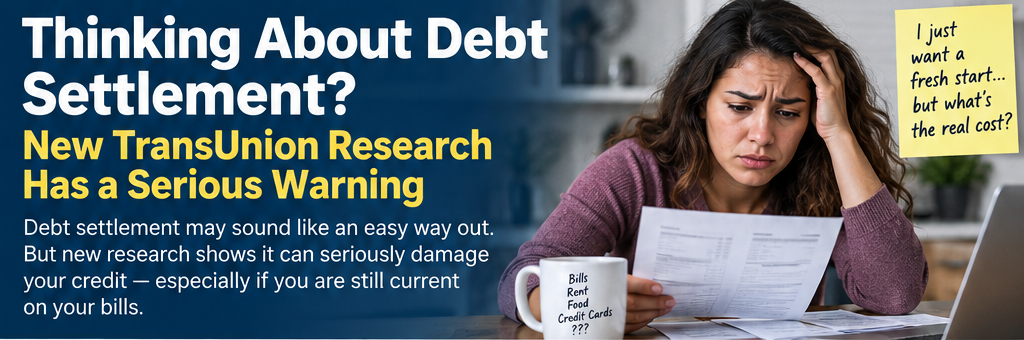
Thinking About Debt Settlement? Read This Before You Stop Paying Debt settlement may sound like an easier and safer choice than bankruptcy. You have probably seen the ads: “Pay only a fraction of what you [...]
Published On: August 9, 2026
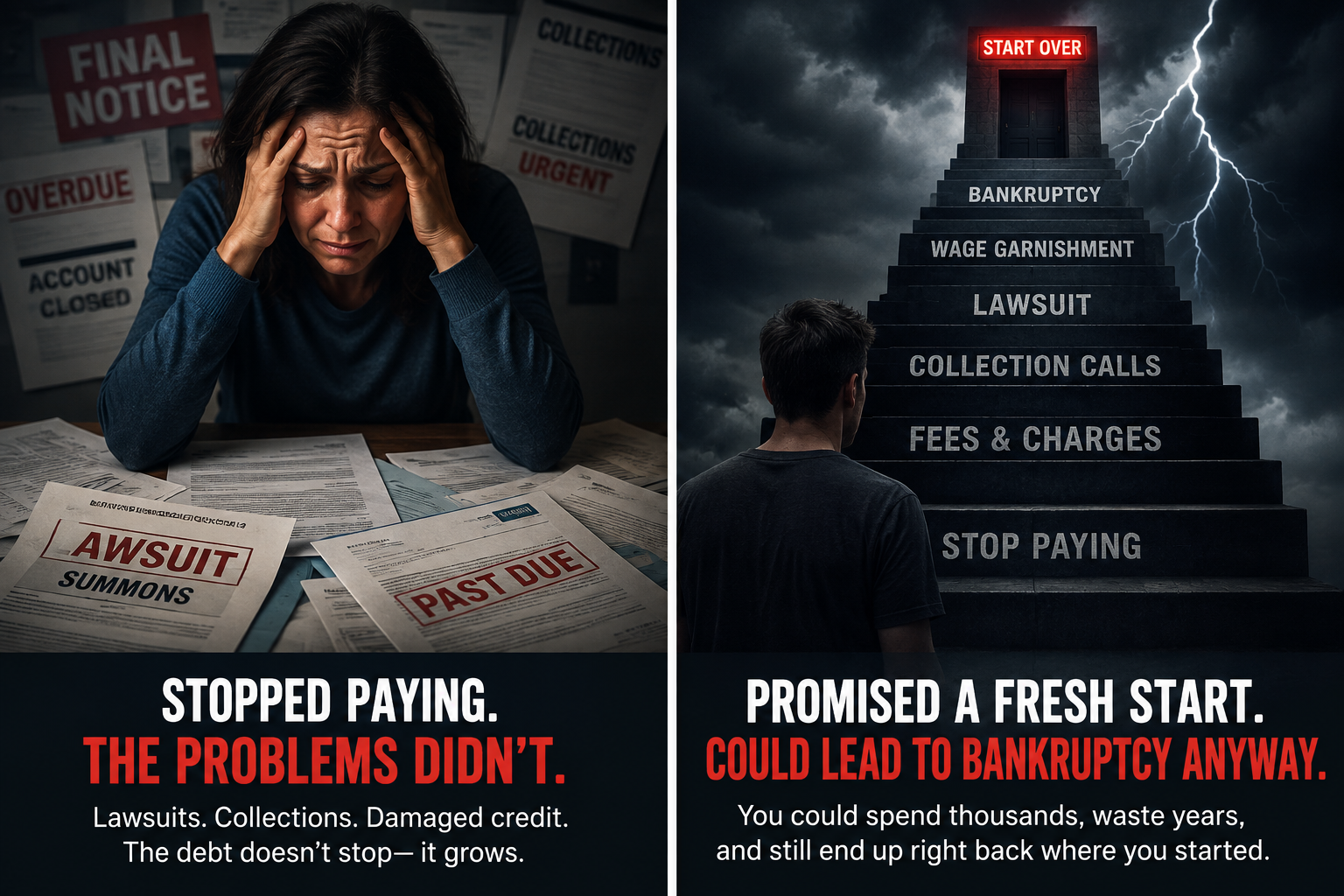
Debt-settlement companies promise to reduce what you owe, but creditors do not have to settle. Learn what federal regulators say about growing balances, lawsuits, fees, taxes and other debt-settlement risks before you stop paying your creditors.
Published On: August 8, 2026
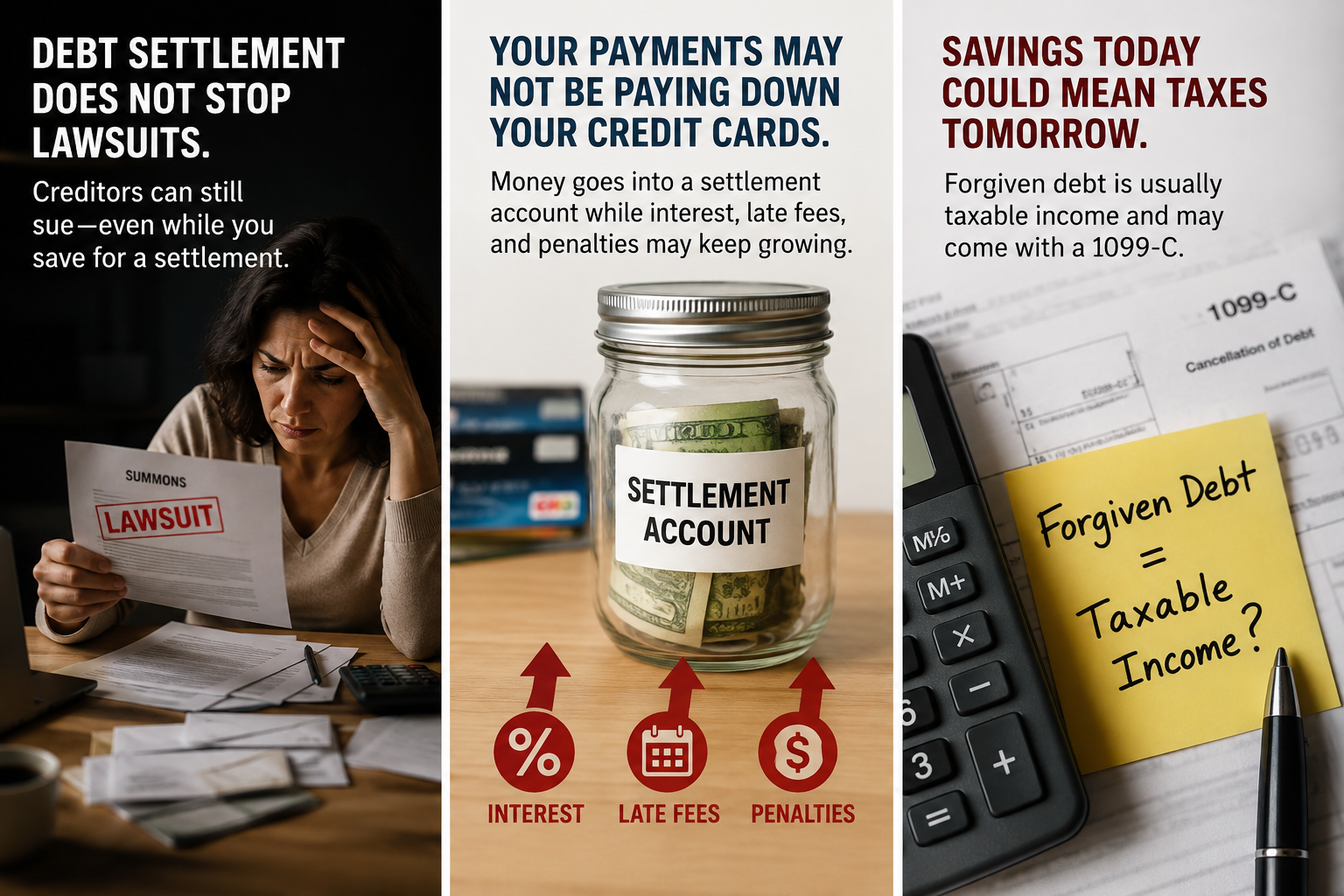
Debt settlement companies promise relief from overwhelming debt, but creditors do not have to settle and lawsuits can continue. Learn about the hidden fees, growing balances, tax consequences, and alternatives before signing a contract.
Published On: July 5, 2026
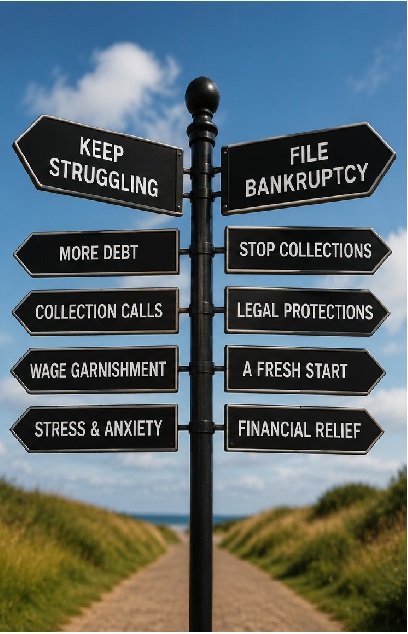
Many people delay filing bankruptcy because of fear, guilt, or misinformation. Learn three common reasons people avoid bankruptcy and why accurate legal advice matters before financial problems worsen. The three most misunderstood reasons not to file bankruptcy are fear of credit damage, fear of losing everything, and the belief that a person must first sacrifice every possible resource. Those concerns deserve serious attention. But they should be evaluated based on the actual facts, applicable law, and a person’s long-term financial position—not on myths.