
Thinking About Debt Settlement? Read This Before You Stop Paying
Debt settlement may sound like an easier and safer choice than bankruptcy.
You have probably seen the ads:
- “Pay only a fraction of what you owe.”
- “Avoid bankruptcy.”
- “Lower your monthly payments.”
- “Get out of debt.”
Those promises can sound very attractive when money is tight. But before you sign up, there is something very important you need to know:
 Debt settlement can seriously damage the credit you are trying to protect.
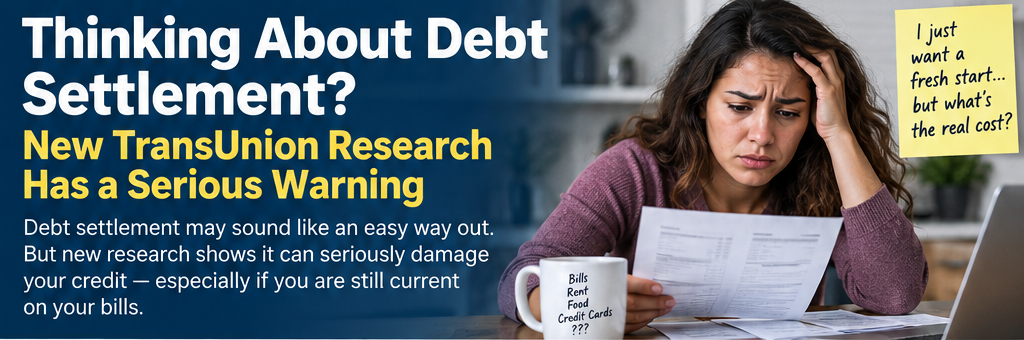
New TransUnion research found that enrollment in third-party debt settlement was linked to major credit-score declines. The decline was especially large among consumers who were still current on their debts before entering debt settlement.
What Did TransUnion Find?
TransUnion is one of the three major nationwide credit reporting companies. In August 2026, TransUnion published research comparing consumers who entered third-party debt settlement programs with consumers who filed bankruptcy.
One group stood out:
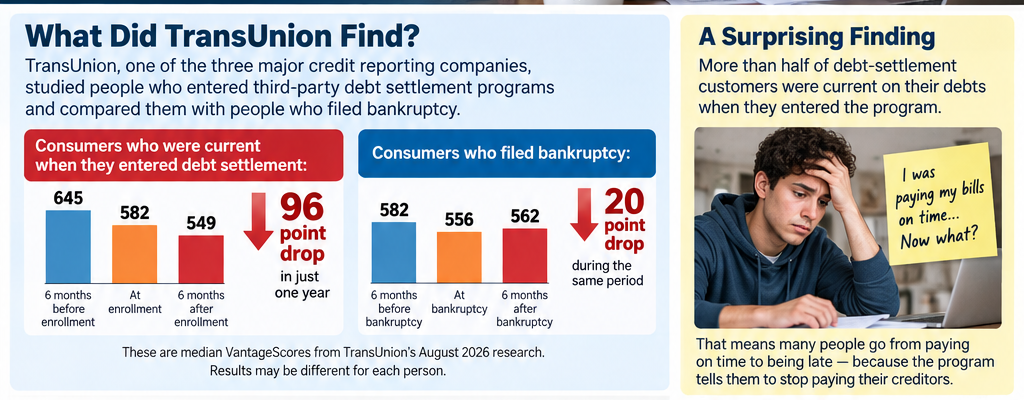 Consumers who were still current on their debts when they entered debt settlement.
Their median VantageScore 4.0 was:
645 — six months before debt settlement
582 — when they entered debt settlement
549 — six months later
That is a 96-point decline from six months before enrollment to six months after enrollment.
TransUnion also looked at consumers who filed bankruptcy. Their median score was:
582 — six months before bankruptcy
556 — when bankruptcy was filed
562 — six months later
That was a 20-point decline from six months before bankruptcy to six months afterward.
Does That Mean Bankruptcy Only Hurts Your Credit by 20 Points?
No. That would be an incorrect conclusion. Many people who file bankruptcy have already suffered credit damage before they file.
They may already have:
- missed payments,
- collection accounts,
- charged-off debts, or
- lawsuits.
That helps explain why the bankruptcy group started with a lower median credit score.
The TransUnion research does not prove that everyone who enters debt settlement will lose 96 points. It also does not mean everyone who files bankruptcy will lose only 20 points. What the research does show is important:
Consumers who were current when they entered debt settlement experienced a very large decline in their median credit score.
That should cause anyone considering debt settlement to stop and ask questions before deliberately stopping payments.
Why Can Debt Settlement Hurt Your Credit?
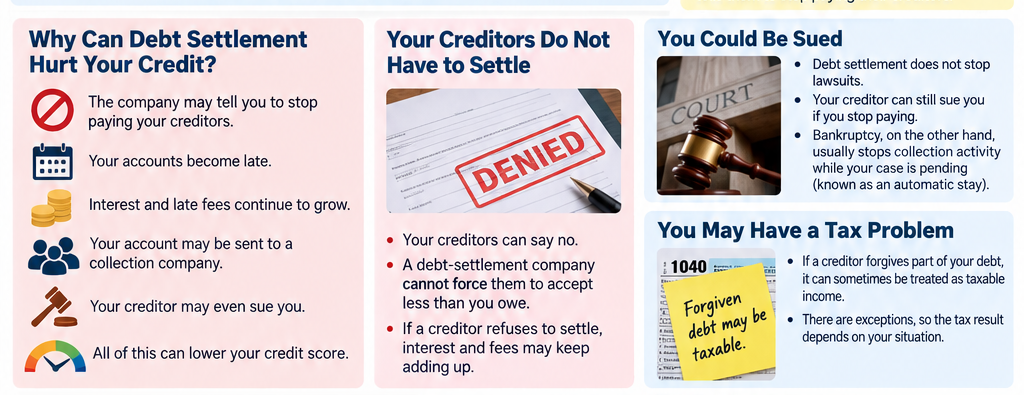 Many people are surprised to learn how debt settlement works. A debt-settlement company may tell you to stop paying your credit cards and other creditors. Instead, you may be told to put money into a separate account. The hope is that, after you have fallen behind and enough money has accumulated, your creditors will agree to accept less than you owe.
But while you wait for a settlement, several things may happen. Your accounts can become late.
A credit card that is current today can become 30 days late. Then 60 days late. Then 90 days late. Those missed payments can damage your credit.
Interest and late fees may keep growing.
Stopping your payments does not make the debt disappear. The balance may actually get larger while you wait.
Your accounts may be sent to collections.
Your creditor may begin stronger collection efforts or send the account to a debt collector.
Your creditor may sue you.
Being enrolled in a debt-settlement program does not stop a creditor from filing a lawsuit.
The Consumer Financial Protection Bureau warns that debt-settlement companies typically encourage consumers to stop paying their credit card bills. The CFPB says this can result in late fees, penalty interest, increased collection efforts, lawsuits and damage to credit scores.
The Federal Trade Commission gives similar warnings. The FTC says debt-settlement programs often encourage consumers to stop making payments and that consumers may face growing interest and fees, collection calls, lawsuits and damage to their credit.
You Could Be Current Today—and Delinquent Tomorrow
This is one of the most important issues for consumers who are still paying their bills.
Imagine that today you have:
- no missed credit card payments,
- no collection accounts,
- no creditor lawsuits, and
- a decent credit score.
Then you enter a debt-settlement program. The company tells you to stop paying several credit cards. A few months later, several accounts may show late payments. Your balances may be growing. Collection calls may have started. One or more creditors may even be considering a lawsuit. The very plan you chose because you wanted to protect yourself from financial problems may have created new ones.
This does not mean every debt-settlement program has the same result. It does mean you should understand exactly what will happen before you stop paying debts that are currently being paid on time.
Your Creditors Do Not Have to Settle
This is another fact that consumers need to understand:
A debt-settlement company cannot force your creditors to accept a settlement.
Your creditor can say no. The CFPB warns that some creditors may refuse to work with a debt-settlement company and that the company may not be able to settle all of a consumer’s debts. The FTC also warns that creditors have no obligation to negotiate a settlement.
Meanwhile, debts that are not being paid may continue to grow because of interest, late fees and other charges.
Debt Settlement Does Not Stop a Creditor From Suing You
Signing a contract with a debt-settlement company does not create legal protection from your creditors. While you are waiting for settlements, creditors may continue collection efforts. They may also sue.
The CFPB specifically warns that working with a debt-settlement company may lead to a creditor filing a debt-collection lawsuit. The FTC warns that a consumer can be sued while waiting for a settlement. If a creditor obtains a judgment, additional collection remedies may be available under applicable law.
That is one important difference between debt settlement and bankruptcy.
Bankruptcy and Debt Settlement Are Very Different
Debt settlement and bankruptcy are not two versions of the same process.
Debt settlement is a private negotiation. A company tries to persuade your creditors to accept less than they are owed. The creditors can refuse.
Bankruptcy is a federal legal process. When a bankruptcy petition is filed, an automatic stay generally takes effect. The United States Courts explains that the automatic stay stops most collection actions. While the stay is in effect, creditors generally may not start or continue lawsuits, wage garnishments or collection calls. There are important exceptions, and the stay can be limited in certain circumstances.
A debt-settlement company cannot give you an automatic stay. This difference can be extremely important if you are already facing lawsuits, garnishments or other serious collection problems.
Debt Settlement May Also Create a Tax Problem, which is rarely a problem in bankruptcy.
Suppose you owe a credit card company:
$20,000
The creditor agrees to accept:
$10,000
and cancels the remaining:
$10,000
You may think you simply saved $10,000.
But there may be a tax issue.
The IRS says that when a debt for which you are personally liable is forgiven for less than the full amount owed, the canceled amount is generally included in income unless an exception or exclusion applies. This does not apply in most bankruptcy cases. There are important exceptions.
For example, the IRS provides an exclusion for qualifying insolvency. Debt canceled in a Title 11 bankruptcy case is also excluded from income when the IRS requirements are met. So the tax result depends on the facts of each person’s situation.
The important lesson is simple:
Do not assume that forgiven debt has no tax consequences.
Does This Mean Debt Settlement Is Always Wrong?
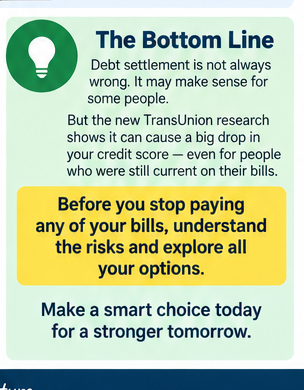
No. Every person’s financial situation is different. Debt settlement may make sense for some people. But you should not choose it simply because an advertisement makes it sound easier, safer or less harmful than bankruptcy. Before deliberately stopping payments on debts that you are currently paying, learn about all of your choices.
Those choices may include:
- working directly with the creditor,
- asking for a hardship program,
- negotiating your own settlement,
- nonprofit credit counseling,
- a debt-management plan,
- bankruptcy, or
- another solution that fits your financial circumstances.
The FTC specifically points out that consumers can try negotiating directly with creditors instead of paying a company to do it for them. The CFPB also recommends considering alternatives, including nonprofit credit counseling and speaking with a bankruptcy attorney about your legal options.
Before You Stop Paying Your Credit Cards, Ask These Questions
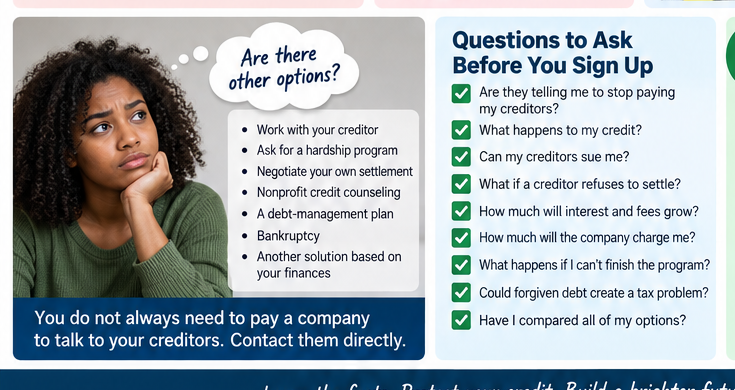 Before entering a debt-settlement program, ask:
- Are you telling me to stop paying my creditors?
- What will happen to my credit if I stop paying?
- Can my creditors sue me while I am in your program?
- What happens if a creditor refuses to settle?
- Will interest and late fees continue to grow?
- How much will I pay the debt-settlement company?
- How long is the program expected to take?
- What happens if I cannot afford to finish the program?
- What happens to debts that are never settled?
- Could forgiven debt create a tax problem?
- Have I compared debt settlement with bankruptcy and my other choices?
Do not make one of the most important financial decisions of your life based only on an advertisement or a salesperson’s promises.
The Bottom Line: Understand the Risk Before You Stop Paying
 The 2026 TransUnion research raises an important warning about debt settlement.
Among consumers who were current when they entered debt settlement, the median VantageScore fell from 645 six months before enrollment to 549 six months afterward.
That is a 96-point decline.
The bankruptcy group studied by TransUnion experienced a 20-point decline during the comparable period. Those numbers do not prove that bankruptcy is always better. They do not mean debt settlement is always wrong. And they do not predict exactly what will happen to any one person’s credit score.
But they challenge an important assumption:
Debt settlement is not automatically the safer way to protect your credit and avoid bankruptcy.
If you are still paying your bills on time, be especially careful before anyone tells you to deliberately stop paying them. Understand what can happen before you stop paying. Once payments stop, late-payment reporting, growing balances, collection efforts and the possibility of lawsuits can follow.
Learn about all of your options first. Then make the choice that makes sense for your financial situation.
Sources
TransUnion — August 27, 2026:
Debt Settlement Enrollment Linked to Greater Credit Score Declines Than Bankruptcy, New TransUnion Research Finds.
Consumer Financial Protection Bureau:
What Is a Debt Relief Program, and How Do I Know If I Should Use One?
Federal Trade Commission:
How To Get Out of Debt—Debt Settlement.
Internal Revenue Service:
Publication 4681 — Canceled Debts, Foreclosures, Repossessions, and Abandonments.
United States Courts:
Chapter 7 — Bankruptcy Basics.
The Federal Trade Commission warns that debt-settlement programs may encourage people to stop making payments. The FTC warns that this can damage credit, increase interest and penalties and expose consumers to collection activity and lawsuits.
Source: Federal Trade Commission — How To Get Out of Debt
The Consumer Financial Protection Bureau gives a similar warning. It explains that debt-settlement companies may ask consumers to stop paying their debts and warns that doing so can hurt credit, increase the amount owed, and lead to lawsuits.
Source: Consumer Financial Protection Bureau—What Is a Debt Relief Program?
Articles:
Three Most Misunderstood Reasons Why People Do Not File Bankruptcy
Thinking About Bankruptcy, Do Not Let These Myths Make Things Worse
Beyond Bankruptcy Paperwork – it’s Not Just Filling Out Forms, Understanding Attorney’s Role


Diane is a well respected Arizona bankruptcy and foreclosure attorney. As a retired law professor, she believes in offering everyone, not just her clients, advice about bankruptcy and Arizona foreclosure laws. Diane is also a mentor to hundreds of Arizona attorneys.
*Important Note from Diane: Everything on this web site is offered for educational purposes only and not intended to provide legal advice, nor create an attorney client relationship between you, me, or the author of any article. Information in this web site should not be used as a substitute for competent legal advice from an attorney familiar with your personal circumstances and licensed to practice law in your state. Make sure to check out their reviews.*




In Case You Missed It

Published On: September 27, 2026
Doing the wrong thing is often easier than doing the right thing. But perhaps that is exactly why honesty, kindness, courage, and responsibility have value. Character is often revealed when the easier choice is available, but we choose the better one.
Published On: September 13, 2026
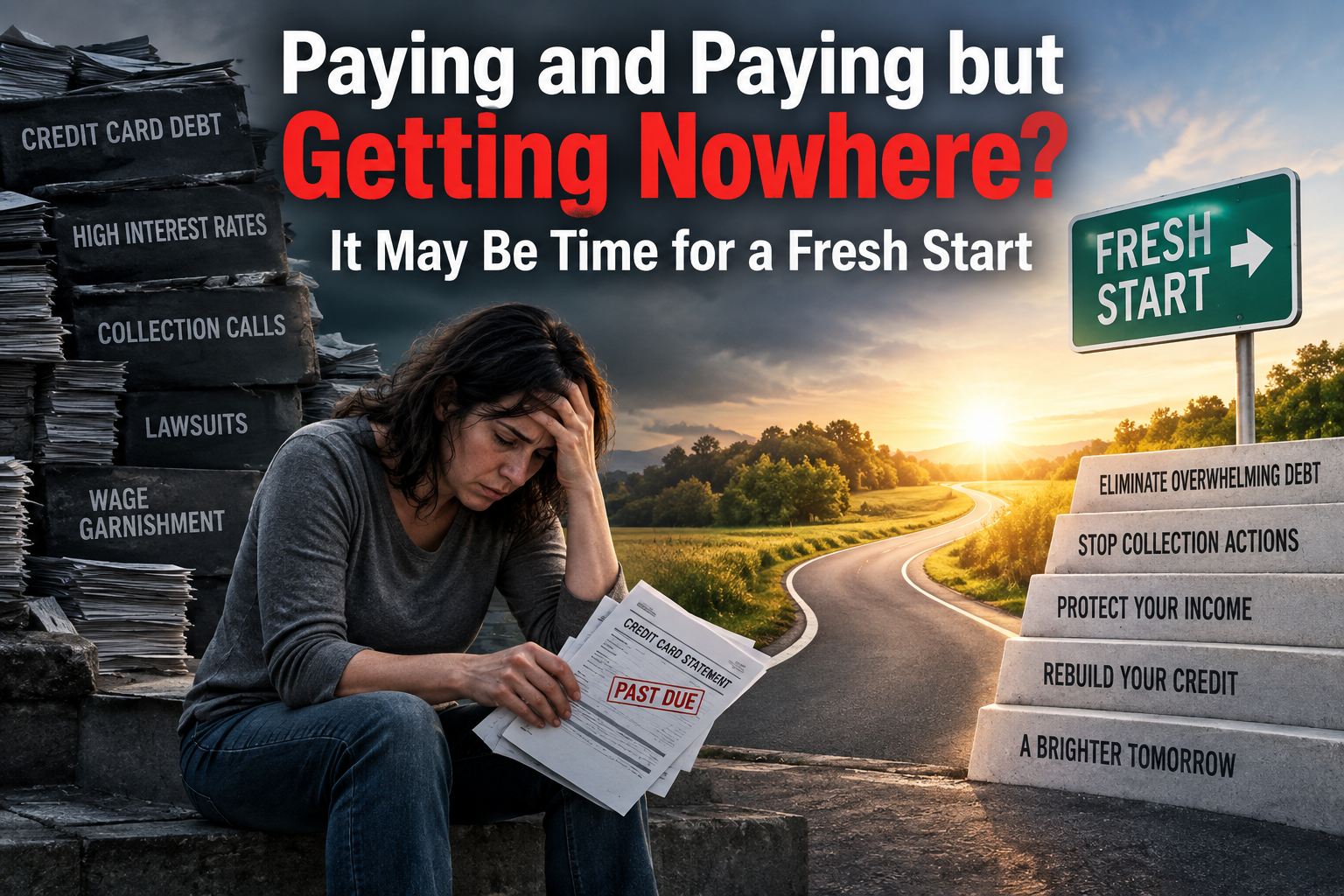
Paying debt every month but getting nowhere can cost you years of income and thousands of dollars in interest. Before signing up with a debt management or debt settlement company, understand what debts are covered, what fees you may pay, whether creditors can still sue or garnish wages, and whether forgiven debt could create tax problems. For some people, bankruptcy may provide a faster, more complete fresh start and a chance to rebuild.
Published On: August 9, 2026
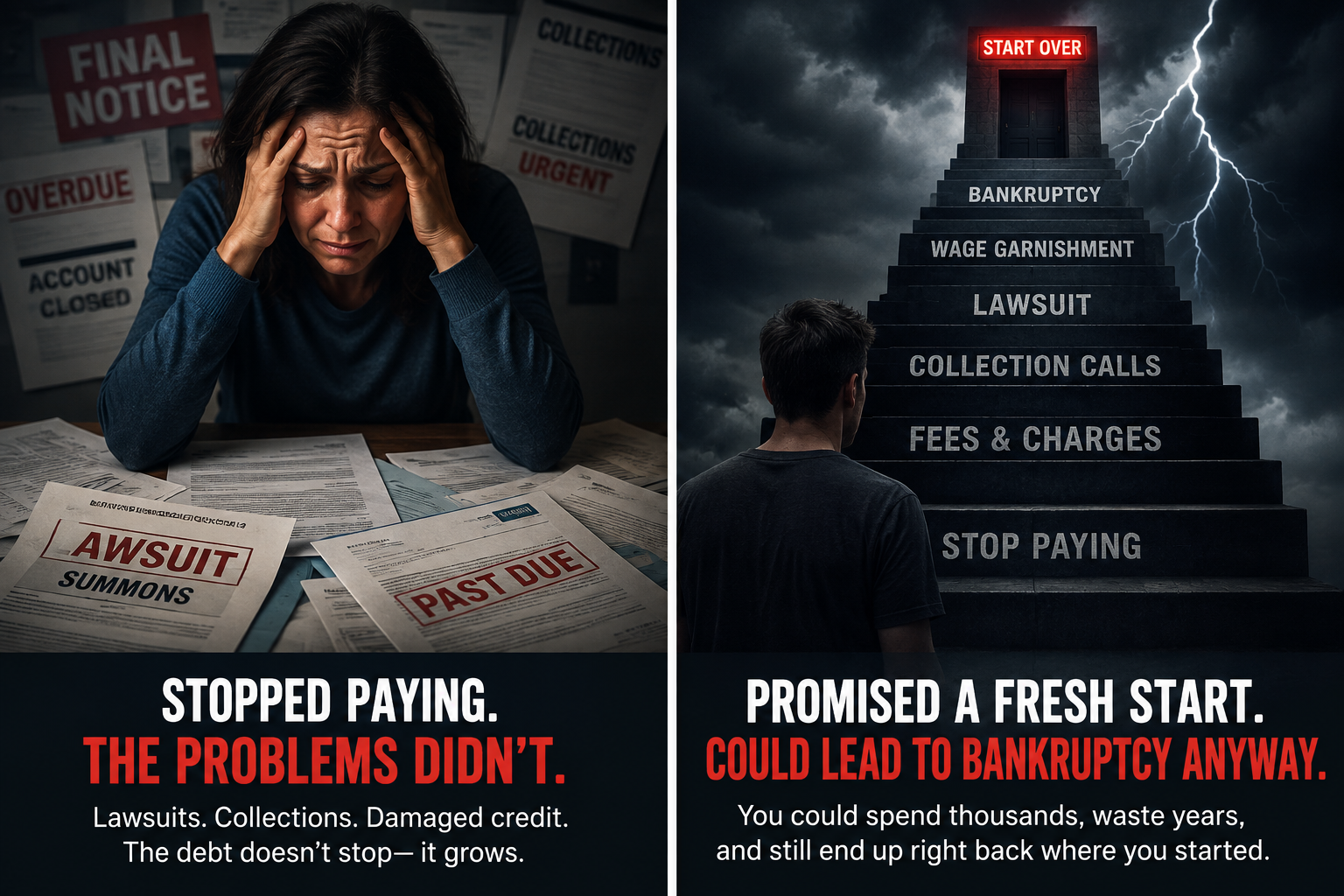
Debt-settlement companies promise to reduce what you owe, but creditors do not have to settle. Learn what federal regulators say about growing balances, lawsuits, fees, taxes and other debt-settlement risks before you stop paying your creditors.
Published On: August 8, 2026
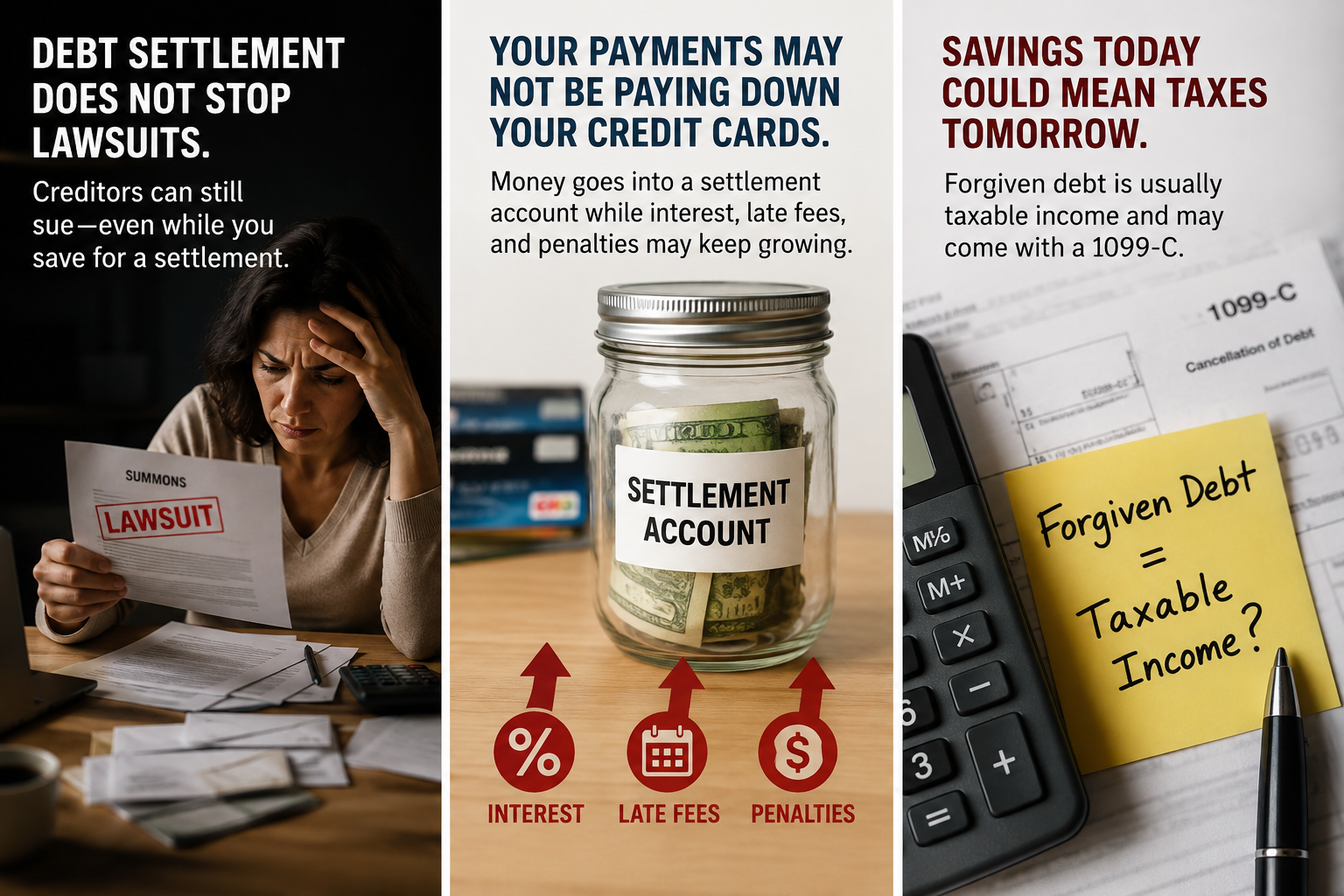
Debt settlement companies promise relief from overwhelming debt, but creditors do not have to settle and lawsuits can continue. Learn about the hidden fees, growing balances, tax consequences, and alternatives before signing a contract.