
 When the Economy Feels Unstable: How to Protect Yourself From Debt in an Unstable Economy
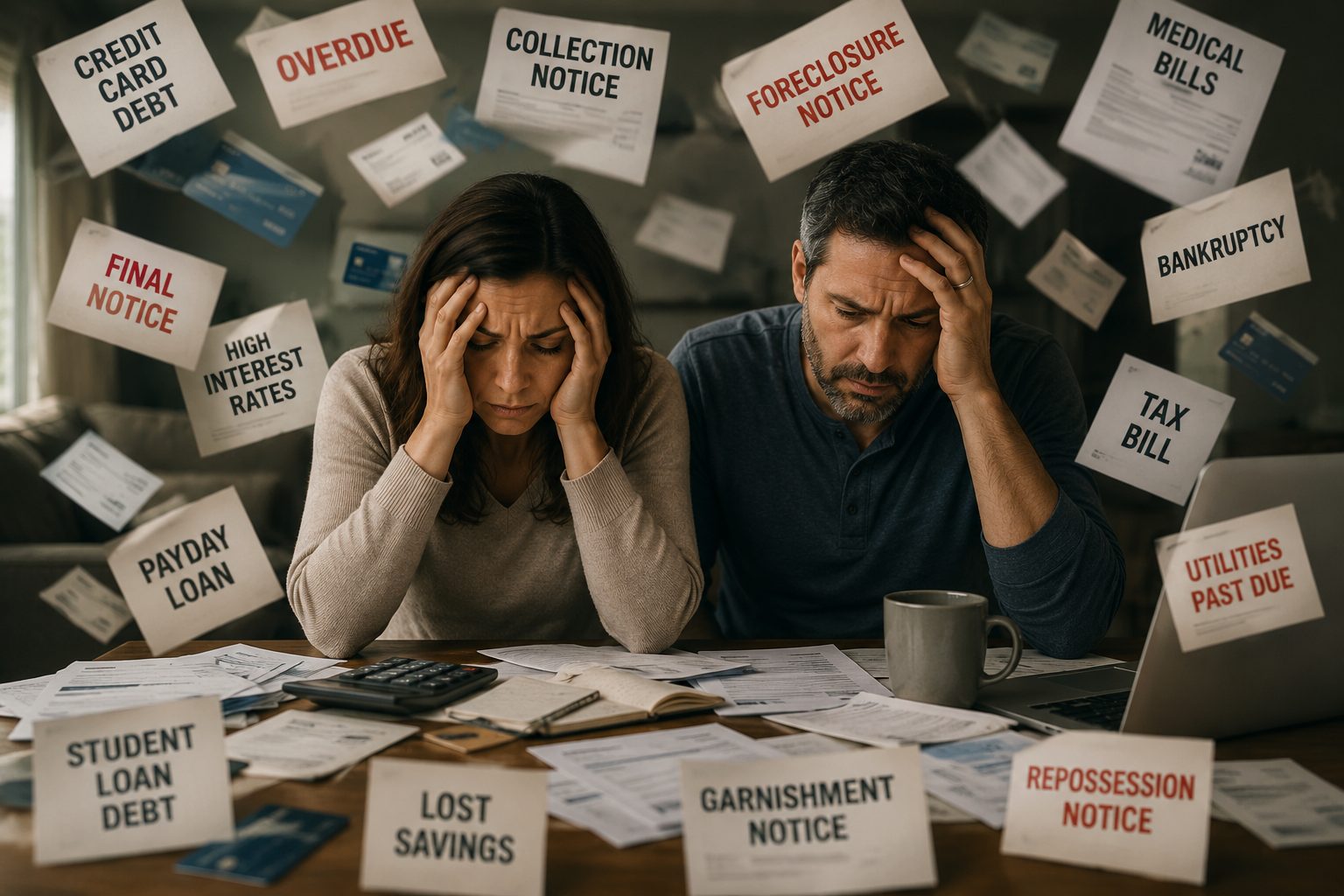
Many families feel squeezed right now. Prices remain high, borrowing money is expensive, and many people are using credit cards just to pay for basics like food, gas, utilities, medical care, or car repairs.
Household debt is also very high. The Federal Reserve Bank of New York reported that total household debt reached $18.8 trillion in the first quarter of 2026. (United States Courts)
That does not mean you failed. It means the financial pressure is real.
The important question is, “What should you do before the problem becomes a crisis?”
Start With the Basics: Know What Is Coming In and Going Out
The first step is simple but crucial. Write down:
- Your monthly income.
- Your rent or mortgage.
- Utilities.
- Food.
- Car payments and insurance.
- Medical expenses.
- Minimum debt payments.
- Lawsuits, garnishments, repossession threats, or foreclosure notices.
Do not guess. Look at your bank statements, pay stubs, credit card bills, and collection letters.
A budget is not meant to shame you. It is meant to show you the truth.
Pay for Survival First
When money is short, pay the bills that protect your basic needs first:
- Housing.
- Food.
- Utilities.
- Necessary transportation.
- Medical needs.
- Insurance.
Credit cards and old medical bills are important, but they usually should not come before food, shelter, and keeping the lights on.
Be careful about using one credit card to pay another, taking payday loans, registration or title loans on your vehicles, or borrowing from retirement funds without getting advice first. These choices may create bigger problems later.
Do Not Ignore Collection Letters or Lawsuits
Debt collectors have rules they must follow. The Fair Debt Collection Practices Act limits what debt collectors can say and do when collecting consumer debts. (Consumer Financial Protection Bureau)
But ignoring a lawsuit can still lead to serious consequences, such as a default judgment, wage garnishment, or bank account levy.
If you receive court papers, act quickly. There may be deadlines. Even if you agree that you owe some money, the amount may be wrong, the creditor may not have the right documents, or there may be legal defenses.
If You Are Behind on a Mortgage, Act Early
If you are worried about missing a mortgage payment, do not wait until a foreclosure sale is already scheduled. The earlier you ask for help, the more options may be available.
Possible options may include:
- Repayment plan.
- Loan modification.
- Forbearance.
- Sale of the home.
- Chapter 13 bankruptcy helps catch up on missed payments over time.
The right choice depends on your income, home value, mortgage balance, arrears, and long-term goals.
Understand the Difference Between Temporary Trouble and Long-Term Debt Trouble
Some financial problems are temporary. For example, you may be behind because of a short illness, job delay, or one-time emergency.
Other problems are long-term. For example:
- Your income is not enough to cover basic living expenses.
- You are using credit cards every month to buy necessities.
- Minimum payments are not reducing the balances.
- You are borrowing from family or retirement accounts to pay old debt.
- You are being sued by creditors.
- Your wages or bank account are being garnished.
- You are facing repossession or foreclosure.
If the debt is growing despite your best efforts, it may be time to consider legal options.
Be Very Careful With Debt Management and Debt Settlement Companies
When people are scared about debt, they often look online for help. Unfortunately, some companies use words like “debt relief,” “debt management,” “debt negotiation,” “debt settlement,” “credit repair,” or “financial freedom” to make their services sound safe.
Some are legitimate. Many are not.
The Federal Trade Commission keeps a public list of companies and people banned by federal court orders from participating in all or specific types of debt-relief businesses. The FTC explains that debt relief generally means a program or service that offers to change the terms of a debt, including reducing the loan balance, interest rate, or fees owed. (Federal Trade Commission)
The common problem
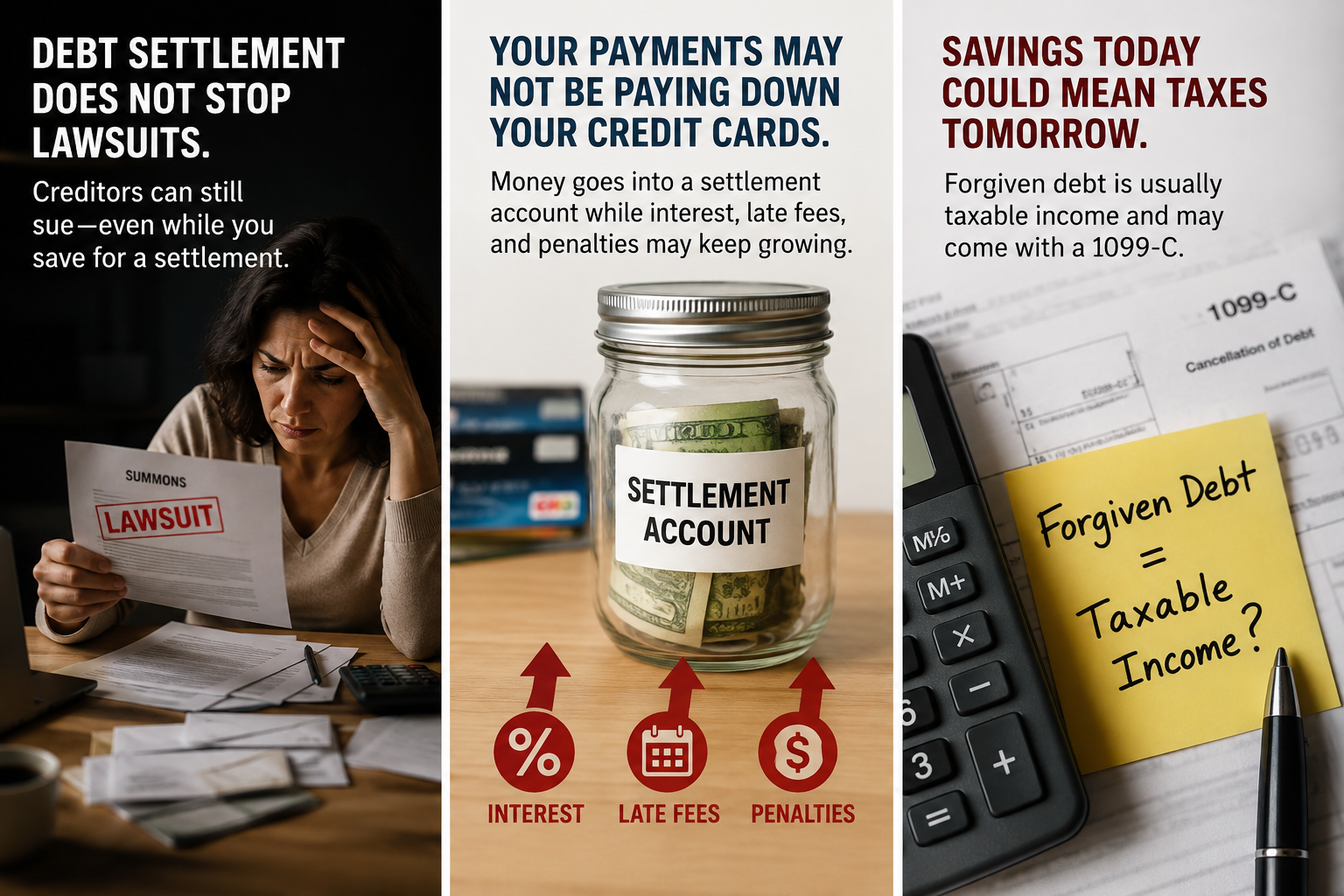
Some debt settlement companies tell consumers to stop paying credit cards and instead send money to the settlement company or to a special account. The promise is usually that the company will later negotiate with creditors for less than the full balance.
That may sound helpful, but it can be dangerous.
While the consumer is waiting:
- Late fees and interest may grow.
- Credit scores may drop.
- Creditors may file lawsuits.
- Wages or bank accounts may be garnished after a judgment.
- The company may charge fees even if little or nothing is actually fixed.
- Some creditors may refuse to work with that company.
Court enforcement actions show why consumers should be cautious
Federal court enforcement actions show why consumers should be careful before hiring a debt-relief company.
In CFPB v. Freedom Debt Relief, LLC, filed in the U.S. District Court for the Northern District of California, the CFPB alleged that Freedom Debt Relief violated the Telemarketing Sales Rule and the Consumer Financial Protection Act. The Bureau alleged that the company charged advance fees, failed to inform consumers of their rights to deposited funds, charged consumers without settling debts as promised, charged consumers after they negotiated their own settlements, and misled consumers about fees and its ability to negotiate directly with all creditors. The case resulted in a stipulated final judgment and order. (Consumer Financial Protection Bureau)
In CFPB v. DMB Financial, LLC, filed in the U.S. District Court for the District of Massachusetts, the CFPB alleged that DMB Financial charged unlawful debt-settlement fees and misled consumers. The CFPB reported that the settlement required DMB to stop charging unlawful settlement fees, stop specified deceptive practices, and stop obtaining consumers’ credit reports without a permissible purpose. (Consumer Financial Protection Bureau)
These cases do not mean every debt-management company is bad. But they do show why consumers should be very careful before signing a contract or sending money.
Warning signs
Be very cautious if a company:
- Tells you to stop paying your creditors.
- Promises to cut your debt by a large percentage.
- Charges fees before debts are actually settled.
- Says lawsuits, garnishments, or foreclosures will definitely stop.
- Claims it can settle with all creditors.
- Refuses to explain its fees in plain English.
- Pressures you to sign right away.
- Tells you not to talk to a lawyer.
- Says it is “government approved” or connected to your bank, unless you can verify that independently.
A bad debt settlement program can leave a consumer with more debt, worse credit, lawsuits, garnishments, and lost savings.
Bankruptcy Is Not a Moral Failure
Bankruptcy is a legal tool created by Congress to help honest people and businesses manage debt they cannot pay.
Chapter 7 is often called “liquidation.” The United States Courts explain that Chapter 7 involves the sale of a debtor’s nonexempt property and distribution of the proceeds to creditors. (United States Courts)
Chapter 13 is different. It is often called a wage earner’s plan because it allows individuals with regular income to propose a repayment plan to pay all or part of their debts over three to five years. (United States Courts)
Bankruptcy is not right for everyone. But waiting too long can sometimes make things worse.
Before You Drain Retirement or Sell Important Property, Get Advice
Many people try to avoid bankruptcy by using retirement funds, selling vehicles, borrowing from family, or paying one creditor while ignoring others.
Sometimes that works. Sometimes it creates new problems.
Before making a major financial move, ask:
- Will the change actually solve the problem?
- Am I only buying a few more months?
- Am I risking protected retirement money?
- Am I paying a debt that might be discharged in bankruptcy?
- Am I transferring property in a way that could create legal problems later?
- Am I protecting one creditor while hurting my family’s basic needs?
Good advice early can prevent expensive mistakes.
A Simple Checklist for Consumers
If your finances feel unstable, start here:
- Start listing all debts.
- Open all mail from courts, creditors, mortgage companies, and car lenders.
- Save pay stubs, tax returns, bank statements, and collection letters.
- Do not ignore lawsuits.
- Do not drain retirement funds without advice.
- Do not transfer property to friends or family to “protect” it.
- Contact your mortgage company early if you are behind.
- Be cautious before hiring a debt management or debt settlement company.
- Talk to a qualified bankruptcy attorney before the emergency becomes worse.
Final Thought
As a retired law professor, my goal is to help people understand their rights and help them plan for a healthy financial future. Most people wait too long to ask for help. They feel embarrassed, overwhelmed, or afraid.
But debt problems rarely resolve themselves. The earlier you understand your options, the more control you may have.
In an unstable economy, the goal is not to be perfect. The goal is to protect your home, your income, your family, and your future.


Diane is a well respected Arizona bankruptcy and foreclosure attorney. As a retired law professor, she believes in offering everyone, not just her clients, advice about bankruptcy and Arizona foreclosure laws. Diane is also a mentor to hundreds of Arizona attorneys.
*Important Note from Diane: Everything on this web site is offered for educational purposes only and not intended to provide legal advice, nor create an attorney client relationship between you, me, or the author of any article. Information in this web site should not be used as a substitute for competent legal advice from an attorney familiar with your personal circumstances and licensed to practice law in your state. Make sure to check out their reviews.*




In Case You Missed It
Published On: September 13, 2026
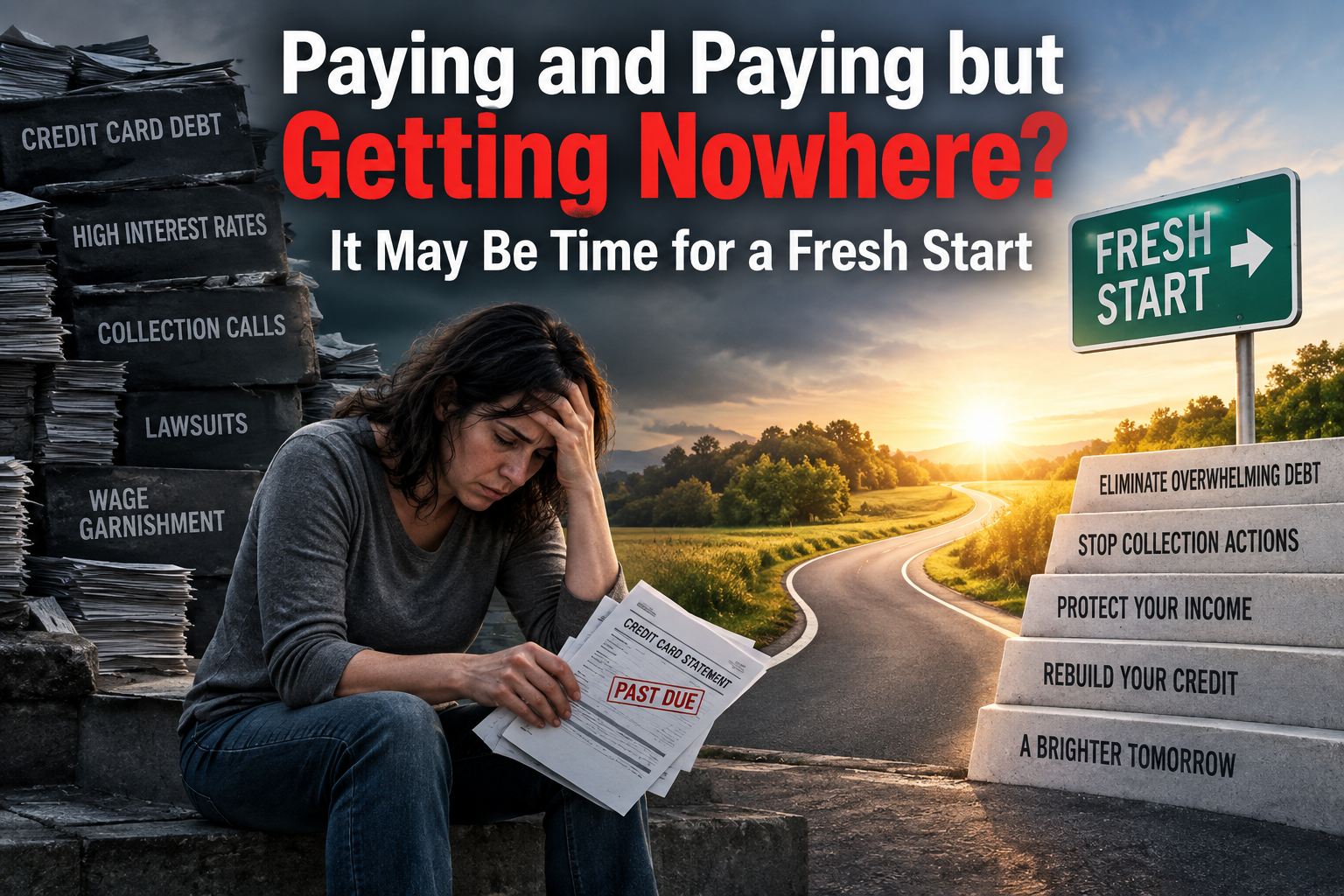
Paying debt every month but getting nowhere can cost you years of income and thousands of dollars in interest. Before signing up with a debt management or debt settlement company, understand what debts are covered, what fees you may pay, whether creditors can still sue or garnish wages, and whether forgiven debt could create tax problems. For some people, bankruptcy may provide a faster, more complete fresh start and a chance to rebuild.
Published On: September 13, 2026
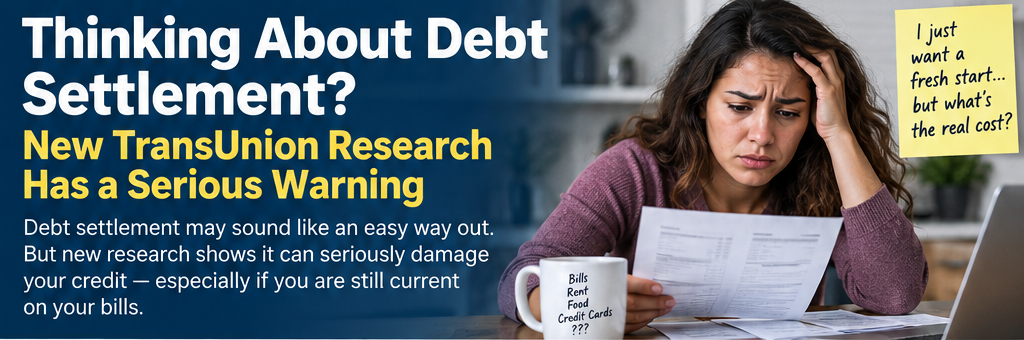
Thinking About Debt Settlement? Read This Before You Stop Paying Debt settlement may sound like an easier and safer choice than bankruptcy. You have probably seen the ads: “Pay only a fraction of what you [...]
Published On: August 9, 2026
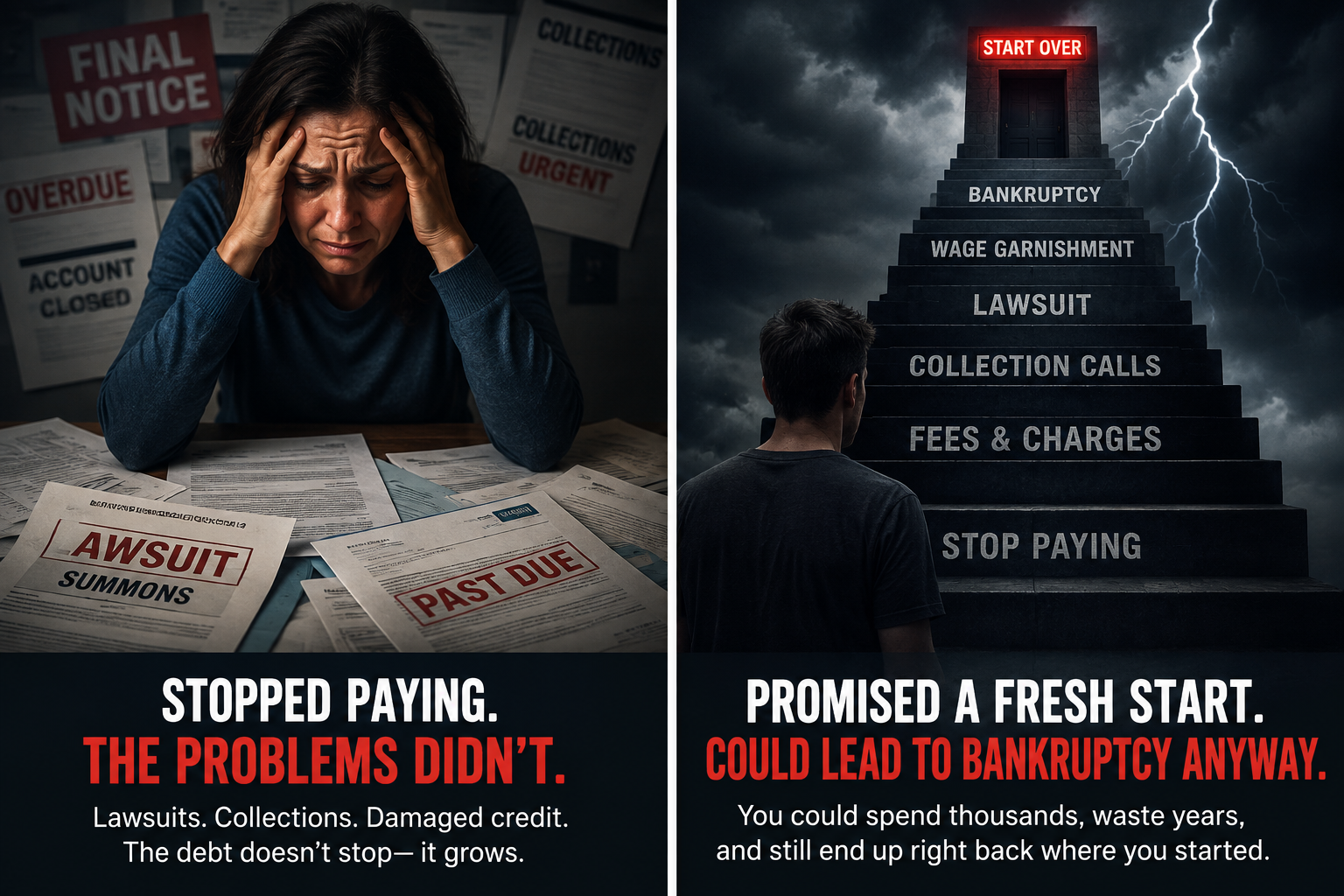
Debt-settlement companies promise to reduce what you owe, but creditors do not have to settle. Learn what federal regulators say about growing balances, lawsuits, fees, taxes and other debt-settlement risks before you stop paying your creditors.
Published On: August 8, 2026
Debt settlement companies promise relief from overwhelming debt, but creditors do not have to settle and lawsuits can continue. Learn about the hidden fees, growing balances, tax consequences, and alternatives before signing a contract.