
Build Financial Stability, Not Just a Better Credit Score
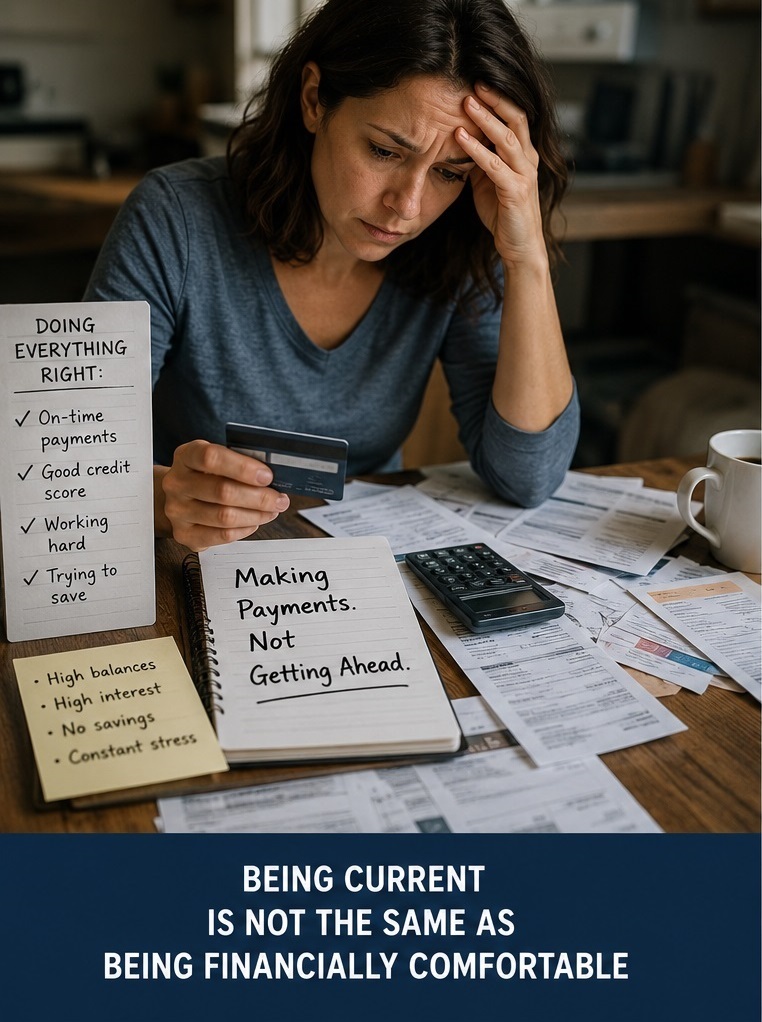 A good credit score can be helpful. It may make it easier to rent an apartment, obtain a mortgage, finance a vehicle, or qualify for lower interest rates. But a good credit score is not the same thing as financial security.
That distinction matters because many people measure their financial success by one number. They watch their credit score closely, make every payment on time, and do everything they can to avoid a late payment. Yet they may still be living with growing credit card balances, no emergency savings, and constant anxiety about the next unexpected expense.
From the outside, they may appear to be doing fine.
Inside their monthly budget, however, there may be very little room left.
The Problem Often Starts Long Before a Missed Payment
Credit card delinquency statistics focus on missed payments. Those numbers are important, but they do not tell the full story.
Financial problems usually begin long before someone misses a payment.
A household may use savings to cover a car repair, medical expense, increase in insurance, or necessary home repair. The credit card becomes a temporary solution. Then groceries, gasoline, utilities, school costs, or another emergency are charged to the same card.
The balance grows.
The minimum payment increases.
Savings are not rebuilt.
Eventually, a person may make a payment on the credit card, only to use the card again immediately for the next necessary expense. They are technically current, but they are not getting ahead.
That is not financial stability. It is financial survival.
A High Credit Score Can Hide a Difficult Reality
I regularly speak with people who have never missed a payment and still have excellent credit scores. They are responsible. They work hard. They are trying to do everything right.
But they are carrying substantial debt.
They may be living paycheck to paycheck. They may be worried every month about the mortgage, vehicle payment, insurance, food, utilities, and credit card bills. They may have stopped contributing to retirement, delayed medical care, postponed necessary repairs, or given up the hope of building savings.
A person with a 750 credit score may still be one unexpected expense away from a serious financial problem.
A credit score measures payment history and use of credit. It does not measure whether someone has enough savings, manageable debt, or enough income left each month to handle real life.
Most of Us Were Never Taught How to Build a Financial Plan
 Another problem is that many people were never taught how to manage money.
Personal finance is often not meaningfully taught in school. Many families also did not talk about budgeting, debt, interest rates, savings, or long-term planning. That is not a criticism of parents. Many parents were never taught those skills either.
As a result, people often make financial decisions one at a time.
A credit-card offer arrives in the mail. A vehicle payment looks manageable. A store offers deferred interest. An emergency arises, and the credit card is available. A home repair cannot wait. A medical bill must be paid.
Each decision may make sense at the time.
But without a larger financial plan, those individual decisions can add up to high monthly payments, growing debt, and no room for the next emergency.
The Goal Is Not Perfection
The goal should not be to have the highest possible credit score.
The goal should be to create a solid financial situation: enough income to cover necessary expenses, debt that is manageable, savings for emergencies, and enough room in the budget to make thoughtful choices instead of choices made under pressure. Tools and resources to use for good financial planning.
That does not happen overnight. It may require difficult changes, better information, or asking for help before the situation becomes overwhelming.
But it starts with recognizing an important truth:
Being current on bills is not always the same as being financially secure.
For many people, the missed payment is not the beginning of the financial problem. It is simply the point at which they can no longer continue holding everything together. Perhaps it is time to learn more about how bankruptcy can help put you back on a good financial path.


Diane is a well respected Arizona bankruptcy and foreclosure attorney. As a retired law professor, she believes in offering everyone, not just her clients, advice about bankruptcy and Arizona foreclosure laws. Diane is also a mentor to hundreds of Arizona attorneys.
*Important Note from Diane: Everything on this web site is offered for educational purposes only and not intended to provide legal advice, nor create an attorney client relationship between you, me, or the author of any article. Information in this web site should not be used as a substitute for competent legal advice from an attorney familiar with your personal circumstances and licensed to practice law in your state. Make sure to check out their reviews.*




In Case You Missed It

Published On: September 27, 2026
Doing the wrong thing is often easier than doing the right thing. But perhaps that is exactly why honesty, kindness, courage, and responsibility have value. Character is often revealed when the easier choice is available, but we choose the better one.
Published On: September 13, 2026
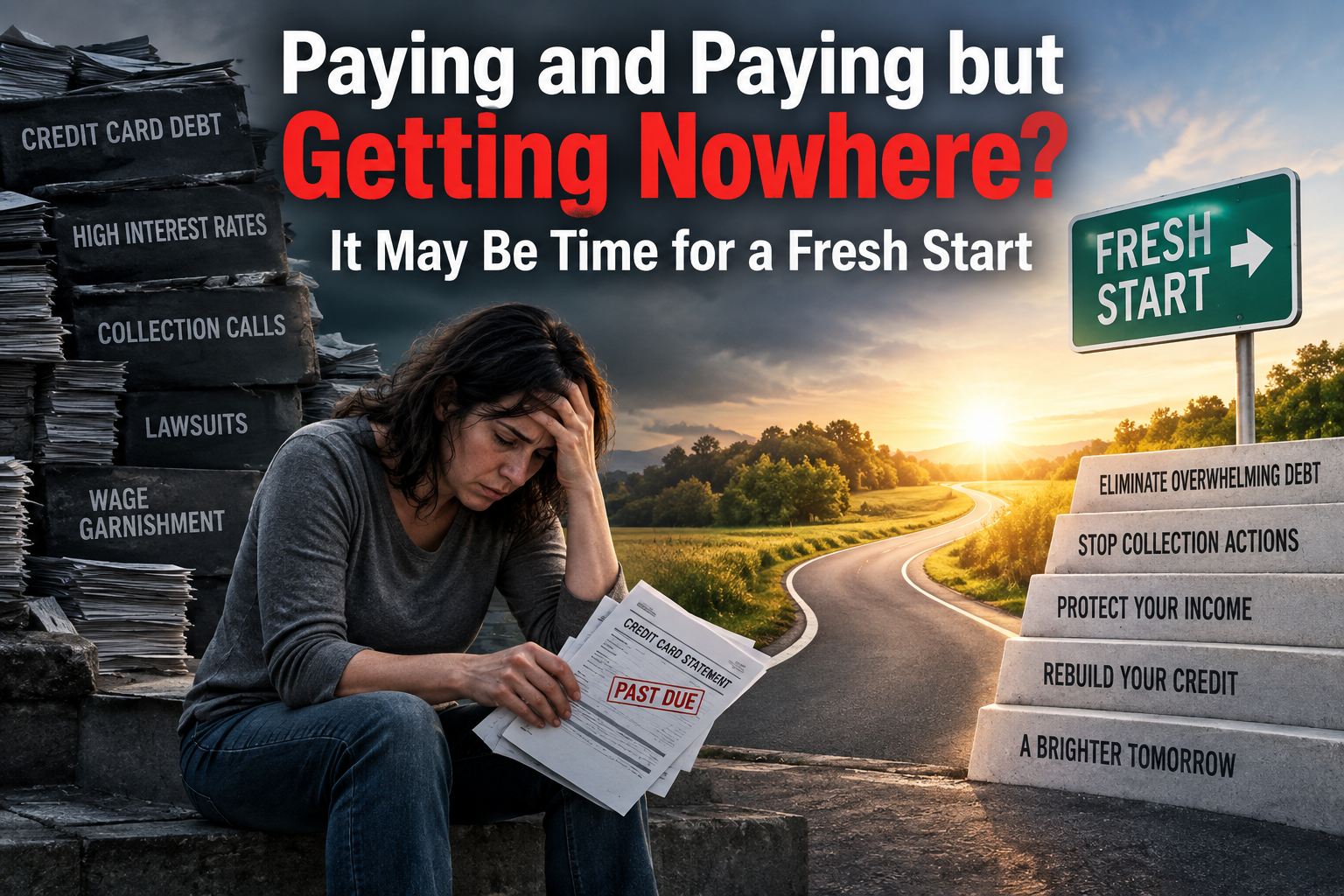
Paying debt every month but getting nowhere can cost you years of income and thousands of dollars in interest. Before signing up with a debt management or debt settlement company, understand what debts are covered, what fees you may pay, whether creditors can still sue or garnish wages, and whether forgiven debt could create tax problems. For some people, bankruptcy may provide a faster, more complete fresh start and a chance to rebuild.
Published On: September 13, 2026
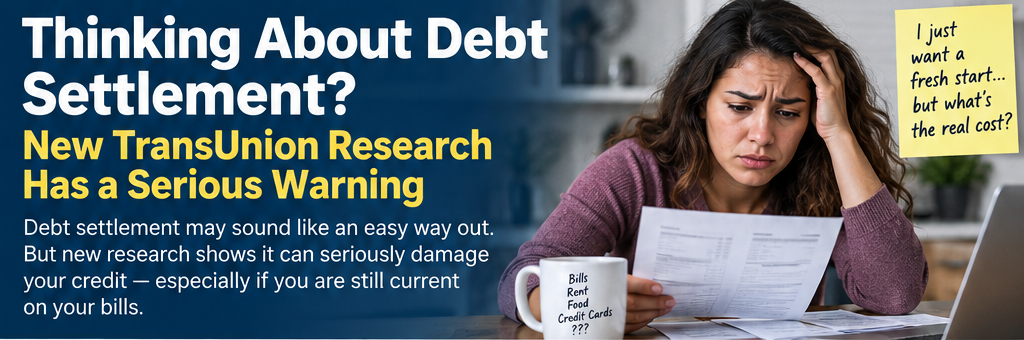
Thinking About Debt Settlement? Read This Before You Stop Paying Debt settlement may sound like an easier and safer choice than bankruptcy. You have probably seen the ads: “Pay only a fraction of what you [...]
Published On: August 9, 2026
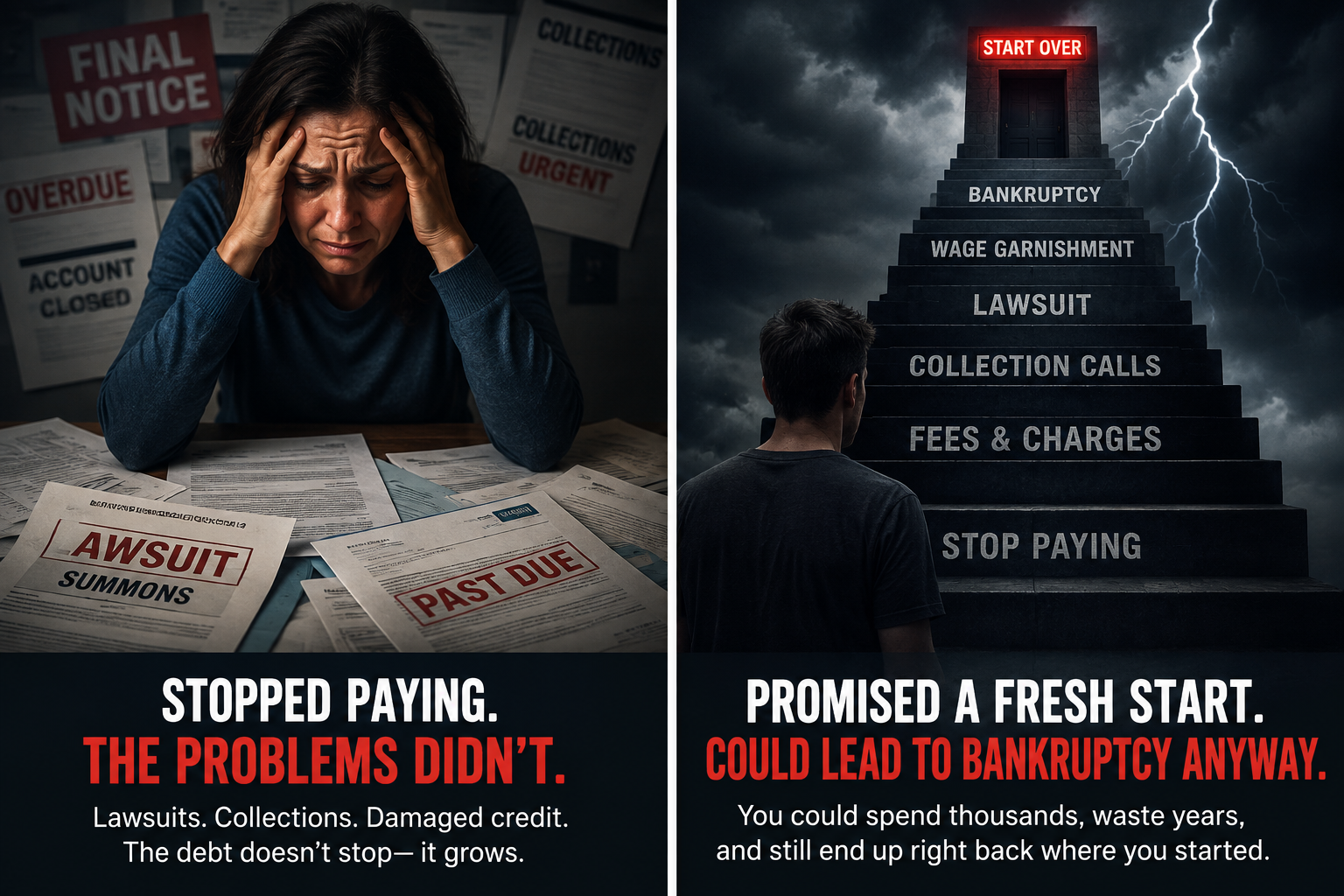
Debt-settlement companies promise to reduce what you owe, but creditors do not have to settle. Learn what federal regulators say about growing balances, lawsuits, fees, taxes and other debt-settlement risks before you stop paying your creditors.