
United States Trustee investigating Chase, Bank of America, Citigroup and Synchrony Financial (formerly GE Capital Retail Finance) for selling “zombie debts”.
These so called “zombie debts” are debts that cannot be killed even by declaring personal bankruptcy. United States Trustee Program is an arm of the Justice Department.
 The New York Times ran an article Debts Cancelled by Bankruptcy Still Mar Consumer Credit Scores. These so called “zombie debts” are debts that cannot be killed even by declaring personal bankruptcy. United States Trustee Program, an arm of the Justice Department, are investigating JPMorgan Chase, Bank of America, Citigroup and Synchrony Financial, formerly known as GE Capital Retail Finance.
The discharge of debt in bankruptcy does not make the debt magically disappear. The debt still exists, but the discharge is a federal injunction which prohibits the creditor forcing the borrower to pay the debt.
Think about the information you are giving this stranger: all your financial information, your children’s names, bank accounts and your social security number. You do this without the slightest guarantee that the information will be kept safe.
Once a borrower receives a discharge the creditors are required to update credit reports to reflect that the debt is no longer owed, removing any notation of “past due” or “charged off.” But, the New York Time’s reporter finds that banks routinely fail to do that. Creditors argue that there is nothing inaccurate  about reporting the debt to a credit reporting agency as still owing, provided that the debt is also reported as discharged in bankruptcy.
Bankruptcy judges suspect that the “errors” of not correctly reporting the debt status are not clerical mistakes, but are debt-collection tactics. Borrowers allege that the banks refuse to fix the mistakes unless they pay the discharged debts. Unfortunately, someone’s future is based on having good credit, such as a new job, the purchase of a new house or car. Therefore, the borrowers are forced to pay discharged debts “zombie debts”. Many borrowers are conned by the debt collector into believing that the debts were not discharged. These folks do not realize this is an illegal ploy to collect on a debt that is not collectable.
Judge Robert D. Drain of the federal bankruptcy court in White Plains said in one opinion that debt buyers know that a bank “will refuse to correct the credit report to reflect the obligor’s bankruptcy discharge, which means that the debtor will feel significant added pressure to obtain a ‘clean’ report by paying the debt”.
In July, Judge Drain refused to throw out the lawsuit against JPMorgan, saying that the “complaint sets forth a cause of action that Chase is using the inaccuracy of its credit reporting on a systematic basis to further its business of selling debts and its buyer’s collection of such debt.” During a hearing last year on a related case, transcripts show, Judge Drain said, “I might refer this, if the facts come out as counsel’s alleging, to the U.S. attorney,” for criminal prosecution.
Whether or not you believe in bankruptcy as an appropriate tool – this behavior by the banks and creditors is clearly an abuse of the legal system. Bankruptcy is a constitutional right and designed to help people and businesses financially start over. Outlawing indentured servitude was core reason why this country was established.
We have several videos on this site. This is one “What is a Bankruptcy Discharge?”


Diane is a well respected Arizona bankruptcy and foreclosure attorney. As a retired law professor, she believes in offering everyone, not just her clients, advice about bankruptcy and Arizona foreclosure laws. Diane is also a mentor to hundreds of Arizona attorneys.
*Important Note from Diane: Everything on this web site is offered for educational purposes only and not intended to provide legal advice, nor create an attorney client relationship between you, me, or the author of any article. Information in this web site should not be used as a substitute for competent legal advice from an attorney familiar with your personal circumstances and licensed to practice law in your state. Make sure to check out their reviews.*




In Case You Missed It
Published On: July 5, 2026
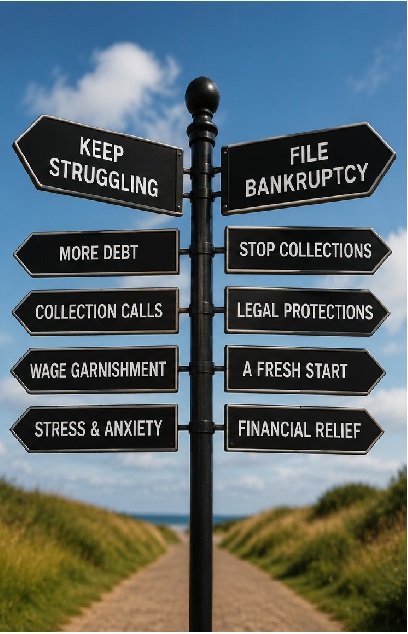
Many people delay filing bankruptcy because of fear, guilt, or misinformation. Learn three common reasons people avoid bankruptcy and why accurate legal advice matters before financial problems worsen. The three most misunderstood reasons not to file bankruptcy are fear of credit damage, fear of losing everything, and the belief that a person must first sacrifice every possible resource. Those concerns deserve serious attention. But they should be evaluated based on the actual facts, applicable law, and a person’s long-term financial position—not on myths.

Published On: June 27, 2026
Merchant cash advances can provide fast cash, but daily withdrawals, stacked MCA loans, SBA loan conflicts, personal guarantees, and bankruptcy risks can quickly put a business and its owner in danger.

Published On: June 26, 2026
Bankruptcy Is Not Just Paperwork: Some Simple Mistakes That Can Cost You For many people, bankruptcy is not the first choice. It is usually something they consider only after they have done everything they know [...]

Published On: June 24, 2026
Build Financial Stability, Not Just a Better Credit Score A good credit score can be helpful. It may make it easier to rent an apartment, obtain a mortgage, finance a vehicle, or qualify for lower [...]