
The District Court ruled inherited IRAs are exempt because they retain their character as retirement funds, but the US Court of Appeals for the Seventh Circuit reversed that ruling.
With this off the question went to the United States Supreme Court for the “final” answer. At least final until they change their mind.
Bully tactics used to scare or coerce buyers.
INHERITED IRAs: The US Supreme Court ruled [opinion, PDF] unanimously in Clark v. Rameker, (13-299 6/12/2014) that funds held in inherited individual retirement accounts (IRAs) are not “retirement funds” for bankruptcy purposes. Section 522 of the Bankruptcy Code exempts tax-exempt retirement funds from the bankruptcy estate.
In Arizona, as with some other states, state exemptions may protected these inherited IRAs, even if they are not protected under federal law(s). A.R.S. Section 33-1126.
The challenge is the laws change, different courts have different laws and sometimes these differences collide. Leaving lawyers scrambling to give their clients competent advice.
In October 2010 the Clarks filed voluntary joint bankruptcy and claimed an inherited IRA under the Section 522 exemption, to which the bankruptcy trustee and creditors objected. The district court ruled that inherited IRAs are exempt because they retain their character as retirement funds, but the US Court of Appeals for the Seventh Circuit reversed that ruling.
In an opinion by Justice Sonia Sotomayor, the Supreme Court agreed with the Seventh Circuit: “the possibility that some investors may use their inherited IRAs for retirement purposes does not mean that inherited IRAs bear the defining legal characteristics of retirement funds. Were it any other way, money in an ordinary checking account (or, for that matter, an envelope of $20 bills) would also amount to “retirement funds” because it is possible for an owner to use those funds for retirement.”
In Arizona, as with some other states, there are state exemptions that may protected these inherited IRA, even if they are not protected under federal law(s). A.R.S. Section 33-1126. But as we all know as the laws change so do the answers to the questions.
We have several videos on this site. Here are a couple:
- “Suggestions on How to Hire an Attorney”
- “Arizona Exempt Property”


Diane is a well respected Arizona bankruptcy and foreclosure attorney. As a retired law professor, she believes in offering everyone, not just her clients, advice about bankruptcy and Arizona foreclosure laws. Diane is also a mentor to hundreds of Arizona attorneys.
*Important Note from Diane: Everything on this web site is offered for educational purposes only and not intended to provide legal advice, nor create an attorney client relationship between you, me, or the author of any article. Information in this web site should not be used as a substitute for competent legal advice from an attorney familiar with your personal circumstances and licensed to practice law in your state. Make sure to check out their reviews.*




In Case You Missed It

Published On: September 27, 2026
Doing the wrong thing is often easier than doing the right thing. But perhaps that is exactly why honesty, kindness, courage, and responsibility have value. Character is often revealed when the easier choice is available, but we choose the better one.

Published On: September 13, 2026
Paying debt every month but getting nowhere can cost you years of income and thousands of dollars in interest. Before signing up with a debt management or debt settlement company, understand what debts are covered, what fees you may pay, whether creditors can still sue or garnish wages, and whether forgiven debt could create tax problems. For some people, bankruptcy may provide a faster, more complete fresh start and a chance to rebuild.

Published On: September 13, 2026
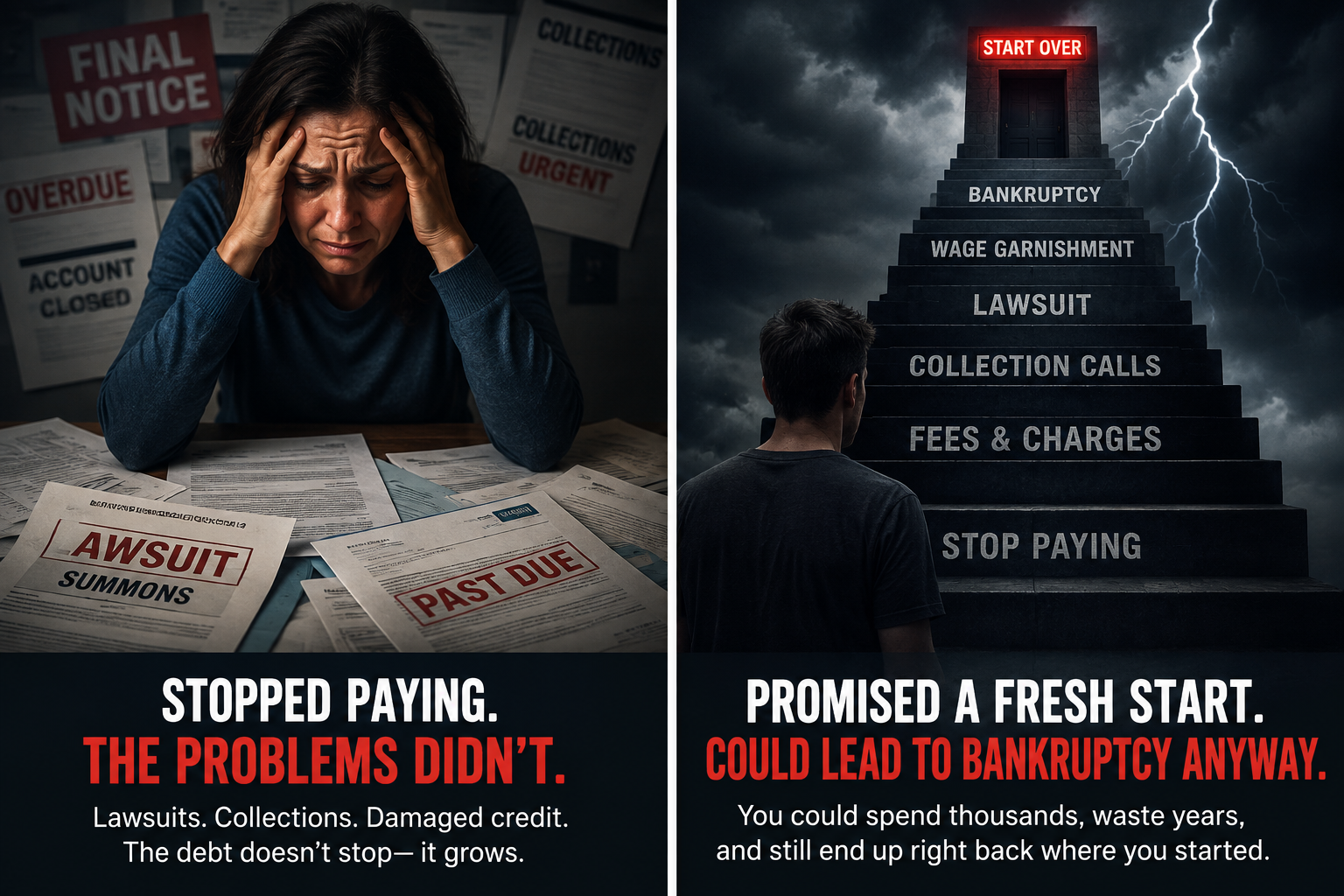
Thinking About Debt Settlement? Read This Before You Stop Paying Debt settlement may sound like an easier and safer choice than bankruptcy. You have probably seen the ads: “Pay only a fraction of what you [...]
Published On: August 9, 2026
Debt-settlement companies promise to reduce what you owe, but creditors do not have to settle. Learn what federal regulators say about growing balances, lawsuits, fees, taxes and other debt-settlement risks before you stop paying your creditors.